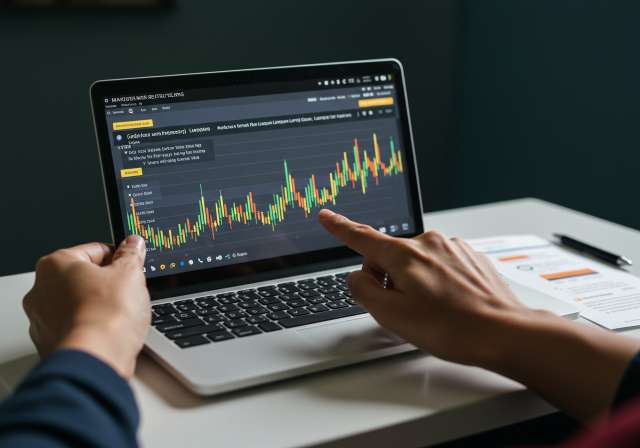
Tag: day trading tips

  • Intraday Trading: A Beginner’s Guide to Mastering the Markets

    Intraday Trading: A Beginner’s Guide to Mastering the Markets

    Unlock the secrets of quick profits! Learn about intraday trading in India, its risks, strategies, and essential tools. Master techniques for navigating the NSE

    Unlock the secrets of quick profits! Learn about intraday trading in India, its risks, strategies, and essential tools. Master techniques for navigating the NSE & BSE today!

    Intraday Trading: A Beginner’s Guide to Mastering the Markets

    Introduction: Decoding the World of Intraday Trading

    The Indian stock market, with its bustling exchanges like the NSE (National Stock Exchange) and BSE (Bombay Stock Exchange), offers a multitude of opportunities for investors. Among these, intraday trading stands out as a fast-paced and potentially lucrative, yet undeniably risky, approach. This guide aims to demystify intraday trading, providing a comprehensive overview for beginners eager to navigate this dynamic landscape.

    What is Intraday Trading?

    Intraday trading, also known as day trading, involves buying and selling financial instruments – primarily stocks, but also futures and options – within the same trading day. The objective is to capitalize on short-term price fluctuations, closing all positions before the market closes. This distinguishes it from longer-term investment strategies, such as holding equity mutual funds through SIPs or investing in ELSS for tax benefits under Section 80C.

    Unlike investors who might hold stocks for months or even years, benefitting from dividends and long-term growth, intraday traders focus solely on price movements within a single day. They rely on technical analysis, charts, and market sentiment to predict these movements and make informed trading decisions. No shares are actually delivered; the profits or losses are calculated based on the difference between the buying and selling price.

    Understanding the Mechanics: How Intraday Trading Works

    To engage in intraday trading, you’ll need a trading account with a stockbroker registered with SEBI (Securities and Exchange Board of India). Many brokers offer specialized intraday trading platforms with advanced charting tools and real-time market data.

    Here’s a breakdown of the typical intraday trading process:

    1. Market Analysis: Analyze market trends, news, and events to identify potential trading opportunities. This involves studying price charts, technical indicators, and economic data.
    2. Stock Selection: Choose stocks that exhibit high volatility and liquidity, as these factors contribute to price fluctuations that intraday traders can exploit.
    3. Entry Point: Identify a specific price point to enter the trade, based on your analysis and trading strategy.
    4. Stop-Loss Order: Place a stop-loss order to limit potential losses if the trade moves against you. This is a crucial risk management tool.
    5. Target Price: Determine a target price at which you plan to exit the trade and secure your profits.
    6. Execution: Execute the trade, buying or selling the stock based on your analysis.
    7. Monitoring: Continuously monitor the trade, adjusting your stop-loss or target price as needed.
    8. Exit: Exit the trade before the market closes, either by selling (if you bought) or buying back (if you sold short) the stock.

    Essential Tools and Techniques for Intraday Trading

    Success in intraday trading hinges on a combination of knowledge, skills, and the right tools. Here are some essential elements:

    • Technical Analysis: Mastering technical analysis is paramount. This involves studying price charts, identifying patterns, and using technical indicators like moving averages, RSI (Relative Strength Index), and MACD (Moving Average Convergence Divergence) to predict future price movements.
    • Fundamental Analysis (to a lesser extent): While intraday trading is primarily technical, understanding fundamental news and events that can impact stock prices is also important. This includes company announcements, economic data releases, and global events.
    • Risk Management: Implementing robust risk management strategies is crucial. This includes setting stop-loss orders, limiting your capital allocation per trade, and diversifying your portfolio. Never risk more than you can afford to lose.
    • Trading Platform: Choose a reliable and user-friendly trading platform that provides real-time market data, advanced charting tools, and efficient order execution.
    • Discipline and Emotional Control: Intraday trading can be emotionally challenging. It’s essential to maintain discipline, stick to your trading plan, and avoid making impulsive decisions based on fear or greed.

    Strategies Employed in Intraday Trading

    Several strategies can be employed in intraday trading, each with its own set of rules and principles. Here are a few popular ones:

    • Trend Following: Identifying and trading in the direction of the prevailing trend. This involves analyzing price charts to determine the overall trend and entering trades when the price retraces slightly before continuing in the trend direction.
    • Breakout Trading: Identifying stocks that are breaking out of a trading range and entering trades in the direction of the breakout. This strategy requires identifying support and resistance levels and waiting for the price to break through these levels.
    • Reversal Trading: Identifying potential reversals in price trends and entering trades in the opposite direction of the prevailing trend. This strategy is riskier and requires careful analysis to identify valid reversal signals.
    • Scalping: Making small profits from small price movements. Scalpers typically hold positions for very short periods, often just a few seconds or minutes.
    • Momentum Trading: Capitalizing on stocks with strong momentum, either upward or downward. This involves identifying stocks that are experiencing rapid price increases or decreases and entering trades in the direction of the momentum.

    Risks Associated with Intraday Trading

    While intraday trading offers the potential for high returns, it also comes with significant risks:

    • High Volatility: Intraday trading involves high volatility, which can lead to rapid and substantial losses.
    • Leverage: Many brokers offer leverage to intraday traders, which can amplify both profits and losses. While leverage can increase potential gains, it also significantly increases the risk of substantial losses.
    • Time Commitment: Intraday trading requires a significant time commitment, as you need to monitor the market throughout the trading day.
    • Emotional Stress: The fast-paced nature of intraday trading can be emotionally stressful, leading to poor decision-making.
    • Market Expertise: Successful intraday trading requires a deep understanding of the market, technical analysis, and risk management.

    Is Intraday Trading Right for You?

    Intraday trading is not suitable for everyone. Before venturing into it, consider the following:

    • Financial Resources: You should only trade with capital that you can afford to lose. Avoid using funds earmarked for essential expenses or long-term investments like PPF or NPS.
    • Time Availability: Do you have the time to dedicate to monitoring the market throughout the trading day?
    • Risk Tolerance: Are you comfortable with the high level of risk associated with intraday trading?
    • Knowledge and Skills: Do you possess the necessary knowledge of technical analysis, market dynamics, and risk management?

    If you’re new to the stock market, it’s advisable to start with safer investment options like mutual funds or ETFs before considering intraday trading. A systematic investment plan (SIP) in a well-diversified equity mutual fund can be a good starting point. Alternatively, consider investing in government-backed schemes like the Public Provident Fund (PPF) or the National Pension System (NPS) for long-term financial security.

    The Role of SEBI in Regulating Intraday Trading

    SEBI plays a crucial role in regulating the Indian stock market, including intraday trading. SEBI’s regulations aim to protect investors, maintain market integrity, and prevent fraudulent activities. These regulations cover various aspects, including margin requirements, trading hours, and disclosure requirements. SEBI also monitors trading activity to detect and prevent insider trading and other market manipulations.

    Tips for Aspiring Intraday Traders

    If you’ve carefully considered the risks and believe that intraday trading is right for you, here are some tips to increase your chances of success:

    • Start Small: Begin with a small amount of capital and gradually increase your trading size as you gain experience.
    • Develop a Trading Plan: Create a detailed trading plan that outlines your trading goals, strategies, risk management rules, and exit criteria.
    • Stick to Your Plan: Adhere to your trading plan and avoid making impulsive decisions based on emotions.
    • Use Stop-Loss Orders: Always use stop-loss orders to limit potential losses.
    • Stay Informed: Keep abreast of market news, economic data releases, and company announcements that can impact stock prices.
    • Learn from Your Mistakes: Analyze your trading performance and learn from your mistakes to improve your strategies.
    • Be Patient: Success in intraday trading takes time and effort. Be patient and persistent, and don’t get discouraged by occasional losses.

    Conclusion: Navigating the Intraday Trading Maze

    Intraday trading offers the potential for quick profits, but it’s a high-risk, high-reward activity that requires knowledge, skills, discipline, and a well-defined trading plan. Before venturing into this dynamic world, carefully assess your financial resources, risk tolerance, and time availability. If you’re new to the stock market, consider starting with safer investment options before exploring the complexities of intraday trading. Remember to always prioritize risk management and stay informed about market trends and regulations. By following these guidelines, you can increase your chances of navigating the intraday trading maze and achieving your financial goals.


  • Decoding Intraday Trading: A Comprehensive Guide for Indian Investors

    Decoding Intraday Trading: A Comprehensive Guide for Indian Investors

    Master intraday trading in India! Learn strategies, risks, and tips for navigating the NSE & BSE. Understand technical analysis, risk management, and make infor

    Master intraday trading in India! Learn strategies, risks, and tips for navigating the NSE & BSE. Understand technical analysis, risk management, and make informed decisions.

    Decoding Intraday Trading: A Comprehensive Guide for Indian Investors

    Understanding the Fundamentals of Intraday Trading in India

    The Indian stock market offers a plethora of opportunities for investors, from long-term investments in fundamentally strong companies to short-term strategies aimed at capitalizing on daily price fluctuations. Among these strategies, one of the most discussed and potentially lucrative, yet also risky, is intraday trading. In this comprehensive guide, we will delve into the intricacies of intraday trading, specifically within the Indian context, focusing on the NSE (National Stock Exchange) and BSE (Bombay Stock Exchange).

    Intraday trading, also known as day trading, involves buying and selling financial instruments, such as stocks, currencies, or commodities, within the same trading day. The primary goal is to profit from small price movements that occur throughout the day. Unlike long-term investing, where investors hold assets for months or years, intraday traders close out all their positions before the market closes, typically around 3:30 PM IST. This eliminates the risk of overnight price fluctuations, but introduces a higher frequency of trading and a need for quick decision-making.

    Key Differences Between Intraday Trading and Delivery Trading

    It’s crucial to understand the distinction between intraday trading and delivery trading, which is the more traditional form of investing. Here’s a table highlighting the key differences:

    Feature Intraday Trading Delivery Trading
    Holding Period Same day (positions are squared off before market close) Days, weeks, months, or years
    Objective Profit from short-term price fluctuations Long-term capital appreciation and dividends
    Risk Higher risk due to leverage and quick decision-making Lower risk (relatively) with a longer time horizon
    Capital Requirement Lower capital requirement due to leverage (margin) Higher capital requirement as full amount is required
    Analysis Technical analysis is crucial Fundamental analysis is more important

    Essential Tools and Strategies for Indian Intraday Traders

    Success in intraday trading requires a combination of knowledge, discipline, and the right tools. Here’s a breakdown of essential elements for Indian traders:

    1. Technical Analysis: Charting Your Course

    Technical analysis is the cornerstone of intraday trading. It involves studying historical price and volume data to identify patterns and trends that can predict future price movements. Key technical indicators commonly used by Indian traders include:

    • Moving Averages (MA): Used to smooth out price data and identify trends. Popular moving averages include the 50-day and 200-day MAs.
    • Relative Strength Index (RSI): An oscillator that measures the magnitude of recent price changes to evaluate overbought or oversold conditions.
    • Moving Average Convergence Divergence (MACD): A trend-following momentum indicator that shows the relationship between two moving averages of a security’s price.
    • Bollinger Bands: Bands plotted at standard deviation levels above and below a moving average. They can indicate price volatility and potential breakout points.
    • Fibonacci Retracement Levels: Horizontal lines that indicate potential support and resistance levels based on Fibonacci ratios.

    2. Risk Management: Protecting Your Capital

    Risk management is paramount in intraday trading. Given the high volatility and leverage involved, it’s crucial to protect your capital. Key risk management strategies include:

    • Stop-Loss Orders: Predetermined price levels at which you will automatically exit a trade to limit your losses. Indian traders should always use stop-loss orders.
    • Position Sizing: Determining the appropriate amount of capital to allocate to each trade based on your risk tolerance and account size. Never risk more than 1-2% of your trading capital on a single trade.
    • Leverage Management: Understanding and carefully managing the leverage provided by your broker. While leverage can amplify profits, it can also magnify losses.
    • Profit Targets: Setting realistic profit targets for each trade and sticking to them. Avoid greed and the temptation to stay in a winning trade for too long.

    3. Choosing the Right Stocks for Intraday Trading

    Selecting the right stocks is crucial for successful intraday trading. Look for stocks that exhibit the following characteristics:

    • High Liquidity: Stocks with high trading volume ensure that you can easily enter and exit positions without significantly affecting the price.
    • Volatility: Stocks that experience significant price fluctuations during the day offer more opportunities for profit.
    • News Flow: Stocks that are in the news or have upcoming earnings announcements tend to be more volatile.

    Indian traders often focus on Nifty 50 stocks due to their high liquidity and volatility. However, it’s important to conduct thorough research and analysis before trading any stock.

    4. Trading Psychology: Maintaining Discipline and Emotional Control

    Trading psychology plays a crucial role in intraday trading success. Fear and greed can lead to impulsive decisions and costly mistakes. Develop the following traits:

    • Discipline: Stick to your trading plan and avoid deviating from your pre-defined strategies.
    • Emotional Control: Manage your emotions and avoid making decisions based on fear or greed.
    • Patience: Wait for the right opportunities and avoid forcing trades.
    • Learning from Mistakes: Analyze your trades, identify mistakes, and learn from them.

    Navigating the Indian Regulatory Landscape for Intraday Trading

    The Indian stock market is regulated by the Securities and Exchange Board of India (SEBI). SEBI has implemented various rules and regulations to protect investors and ensure fair market practices. Indian intraday traders need to be aware of these regulations:

    • Margin Requirements: SEBI sets margin requirements for intraday trading to limit the amount of leverage that traders can use. These requirements can vary depending on the stock and the broker.
    • Surveillance Measures: SEBI actively monitors trading activity to detect and prevent market manipulation and insider trading.
    • Investor Grievance Redressal: SEBI provides a mechanism for investors to file complaints against brokers and other market participants.

    It is important to choose a reputable broker that is registered with SEBI and complies with all regulatory requirements. Check the broker’s registration status and background before opening an account.

    Intraday Trading vs. Other Investment Options in India: A Comparative Look

    While intraday trading offers the potential for quick profits, it’s important to compare it with other investment options available to Indian investors. Here’s a brief comparison:

    • Mutual Funds: Offer diversification and professional management. Suitable for long-term investors seeking capital appreciation. Systematic Investment Plans (SIPs) are a popular way to invest in mutual funds.
    • Equity Linked Savings Scheme (ELSS): Tax-saving mutual funds that invest in equities. Offer tax benefits under Section 80C of the Income Tax Act.
    • Public Provident Fund (PPF): A government-backed savings scheme that offers guaranteed returns and tax benefits. Suitable for long-term savings.
    • National Pension System (NPS): A retirement savings scheme that allows individuals to invest in a mix of equity, debt, and government securities.

    Intraday trading is generally not recommended for beginners or those with a low-risk tolerance. It requires significant time, effort, and knowledge. It’s crucial to understand your risk profile and investment goals before engaging in intraday trading.

    Practical Tips for Aspiring Intraday Traders in India

    Here are some practical tips for Indian investors who are considering venturing into intraday trading:

    • Start Small: Begin with a small amount of capital that you can afford to lose.
    • Practice with Paper Trading: Use a paper trading account to simulate real trading without risking any money.
    • Develop a Trading Plan: Create a detailed trading plan that outlines your strategies, risk management rules, and profit targets.
    • Stay Updated: Keep abreast of market news, economic indicators, and corporate announcements.
    • Continuously Learn: Intraday trading is a constantly evolving field. Continuously learn and adapt your strategies to changing market conditions.

    While the allure of quick profits in intraday trading is undeniable, it’s vital to approach it with caution, discipline, and a thorough understanding of the risks involved. Before diving into the world of daily market maneuvers, ensure you have a solid grasp of technical analysis, risk management, and trading psychology. Remember to always prioritize protecting your capital and trade responsibly.

  • Intraday Trading: A Beginner’s Guide to Navigating the Indian Stock Market

    Intraday Trading: A Beginner’s Guide to Navigating the Indian Stock Market

    Master intraday trading in India! Learn strategies, risks, and tips for navigating the NSE & BSE. Discover how to make informed decisions and potentially profit

    Master intraday trading in India! Learn strategies, risks, and tips for navigating the NSE & BSE. Discover how to make informed decisions and potentially profit from short-term market movements. Invest wisely and understand the Indian stock market!

    Intraday Trading: A Beginner’s Guide to Navigating the Indian Stock Market

    Understanding Intraday Trading in the Indian Context

    The Indian stock market, with its vibrant exchanges like the National Stock Exchange (NSE) and the Bombay Stock Exchange (BSE), offers numerous opportunities for investors. Among the various trading styles, short-term trading is a popular choice, especially for those seeking quick profits. This guide will delve into the intricacies of such trading, providing a comprehensive overview for beginners venturing into this dynamic realm.

    What is Intraday Trading?

    This involves buying and selling stocks or other financial instruments within the same trading day. The goal is to capitalize on small price fluctuations that occur throughout the day, aiming to close all positions before the market closes. Unlike long-term investing, traders do not hold positions overnight, thus avoiding overnight risk and gap-up/gap-down scenarios. It’s a high-risk, high-reward game that demands discipline, quick decision-making, and a thorough understanding of market dynamics.

    Key Differences Between Intraday Trading and Delivery Trading

    The core difference lies in the holding period. In delivery trading, also known as positional trading, you buy stocks and hold them for a longer period, ranging from days to months or even years. The intention is to profit from long-term price appreciation. In contrast, trading involves very short-term positions. Here’s a table summarizing the key differences:

    Feature Intraday Trading Delivery Trading
    Holding Period Same day (positions closed before market close) Days, weeks, months, or years
    Objective Profit from small, short-term price movements Profit from long-term price appreciation
    Risk High (due to leverage and short time frame) Relatively Lower (but still subject to market risk)
    Capital Requirement Lower (due to leverage) Higher (no leverage or very limited)
    Analysis Technical analysis (charts, indicators) Fundamental analysis (company financials, industry trends)

    Essential Steps Before You Start Intraday Trading

    Before diving into the world of trading, several crucial steps must be taken to ensure you’re well-prepared and informed. This isn’t a get-rich-quick scheme; it requires dedicated learning and a strategic approach.

    1. Education and Knowledge

    The foundation of successful trading is solid knowledge. You need to understand:

    • Technical Analysis: Learn to read charts, identify patterns (e.g., head and shoulders, double tops/bottoms), and use technical indicators (e.g., Moving Averages, RSI, MACD) to predict price movements. Several online resources, books, and courses are available specifically for Indian markets.
    • Fundamental Analysis (Basic): While primarily used for long-term investing, understanding basic fundamental concepts like Earnings Per Share (EPS) and Price-to-Earnings (P/E) ratio can help you avoid trading stocks of fundamentally weak companies.
    • Risk Management: Understand how to calculate position size, set stop-loss orders, and manage your capital effectively.
    • Market News and Events: Stay updated on economic news, company announcements, and global events that can impact the market. Follow reputable financial news sources specific to India, such as the Economic Times, Business Standard, and Livemint.

    2. Choosing the Right Broker

    Selecting a reliable and reputable broker is paramount. Consider the following factors:

    • Brokerage Charges: Compare brokerage fees across different brokers. Some offer flat-fee pricing, while others charge a percentage of the transaction value. Look for brokers with competitive rates for trading.
    • Trading Platform: Ensure the broker’s platform is user-friendly, reliable, and offers the necessary tools and features, such as real-time charts, order placement options, and research reports. Many Indian brokers offer mobile trading apps.
    • Leverage: Understand the leverage offered by the broker and use it judiciously. While leverage can amplify profits, it can also magnify losses. SEBI regulates leverage levels to protect retail investors.
    • Customer Support: Check the quality and responsiveness of the broker’s customer support. You may need assistance with technical issues or order-related queries.
    • SEBI Registration: Verify that the broker is registered with SEBI (Securities and Exchange Board of India).

    3. Developing a Trading Strategy

    A well-defined trading strategy is essential for consistent results. Your strategy should include:

    • Entry and Exit Rules: Clearly define the conditions under which you will enter and exit a trade. These rules should be based on your technical analysis and risk tolerance.
    • Stop-Loss Orders: Always use stop-loss orders to limit potential losses. Determine the appropriate stop-loss level based on your risk appetite and the volatility of the stock.
    • Target Prices: Set target prices for your trades to define your profit objectives.
    • Time Horizon: Decide how long you are willing to hold a position. Remember, it is short-term by definition.

    4. Risk Management is Key

    Effective risk management is the cornerstone of successful trading. Here are some key principles:

    • Capital Allocation: Never risk more than a small percentage of your capital on any single trade. A common rule is to risk no more than 1-2% of your trading capital per trade.
    • Position Sizing: Calculate your position size based on your risk tolerance and the distance between your entry price and stop-loss order.
    • Stop-Loss Orders: Always use stop-loss orders to limit potential losses.
    • Avoid Overtrading: Resist the temptation to trade excessively. Stick to your trading plan and avoid impulsive decisions.
    • Emotional Control: Manage your emotions effectively. Avoid trading out of fear or greed.

    5. Practice with Paper Trading

    Before trading with real money, practice with a paper trading account (also known as a virtual trading account). This allows you to simulate trading without risking any capital. Many brokers offer paper trading accounts with real-time market data. This is an excellent way to test your strategies and gain experience.

    Strategies Commonly Used in India

    Several strategies are popular among Indian traders. Here are a few examples:

    1. Breakout Trading

    This strategy involves identifying stocks that are breaking out of a consolidation pattern or range. Traders enter a long position when the price breaks above resistance or a short position when the price breaks below support. This strategy requires careful monitoring of price charts and volume.

    2. Momentum Trading

    Momentum trading involves buying stocks that are showing strong upward momentum and selling stocks that are showing strong downward momentum. Traders use indicators like RSI and MACD to identify stocks with high momentum.

    3. Scalping

    Scalping is a high-frequency trading strategy that involves making numerous small profits on tiny price movements. Scalpers typically hold positions for only a few seconds or minutes. This strategy requires lightning-fast execution and a deep understanding of order book dynamics.

    4. Gap and Go

    This strategy focuses on stocks that gap up (open significantly higher than the previous day’s close) or gap down (open significantly lower). Traders look for stocks with strong gaps and enter positions in the direction of the gap, anticipating further price movement.

    The Role of Technical Indicators

    Technical indicators are mathematical calculations based on price and volume data that are used to generate trading signals. Some commonly used indicators include:

    • Moving Averages (MA): Used to smooth out price data and identify trends.
    • Relative Strength Index (RSI): Measures the magnitude of recent price changes to evaluate overbought or oversold conditions.
    • Moving Average Convergence Divergence (MACD): A trend-following momentum indicator that shows the relationship between two moving averages of a stock’s price.
    • Bollinger Bands: Measures the volatility of a stock’s price and identifies potential breakout or breakdown points.
    • Fibonacci Retracements: Used to identify potential support and resistance levels based on Fibonacci ratios.

    Tax Implications in India

    Profits are treated as speculative business income and are taxed according to your income tax slab. It is crucial to maintain accurate records of your trades and consult with a tax advisor to understand the tax implications. Losses can be set off against speculative business income. Remember to file your taxes accurately and on time.

    The Psychological Aspect of Trading

    The mental game is just as important as the technical aspects. Fear, greed, and hope can cloud your judgment and lead to impulsive decisions. Develop emotional discipline, stick to your trading plan, and avoid chasing losses. Mindfulness and meditation techniques can help you manage your emotions effectively.

    Regulation by SEBI

    SEBI (Securities and Exchange Board of India) regulates the Indian stock market and has implemented various measures to protect retail investors. These measures include:

    • Margin Requirements: SEBI sets margin requirements to limit the amount of leverage that brokers can offer to retail investors.
    • Circuit Breakers: Circuit breakers are triggered when the market or individual stocks experience extreme price fluctuations.
    • Investor Grievance Redressal: SEBI provides a mechanism for investors to file complaints against brokers or companies.

    Staying Updated and Continuing Education

    The market is constantly evolving, so it’s crucial to stay updated and continue learning. Attend webinars, read books, and follow reputable financial news sources. Consider joining a trading community or mentorship program to learn from experienced traders.

    Beyond Stocks: Other Instruments for Intraday Trading

    While stocks are the most common instrument, other options exist. These include:

    • Index Futures: Trading futures of indices like Nifty 50 or Bank Nifty.
    • Currency Futures: Trading futures contracts of currency pairs like USD/INR.
    • Commodity Futures: Trading futures contracts of commodities like gold, silver, and crude oil.

    Conclusion: Is It Right for You?

    can be a profitable venture, but it requires a significant commitment of time, effort, and capital. It’s not suitable for everyone. If you’re risk-averse, lack the discipline to stick to a trading plan, or are looking for a get-rich-quick scheme, it’s best to avoid it. However, if you’re willing to invest the time and effort to learn the ropes, develop a sound trading strategy, and manage your risk effectively, it can be a rewarding experience.

  • Intraday Trading: A Beginner’s Guide to Day Trading in India

    Intraday Trading: A Beginner’s Guide to Day Trading in India

    Demystifying intraday trading in India! Learn the risks, strategies, and essential tips for navigating the NSE & BSE. Discover if it’s right for you and your fi

    Demystifying intraday trading in India! Learn the risks, strategies, and essential tips for navigating the NSE & BSE. Discover if it’s right for you and your financial goals.

    Intraday Trading: A Beginner’s Guide to Day Trading in India

    What is Intraday Trading?

    Intraday trading, often called day trading, is a type of trading where you buy and sell stocks or other financial instruments within the same trading day. The goal is to profit from small price fluctuations that occur throughout the day. All positions are closed before the market closes, meaning you don’t hold any positions overnight. This distinguishes it from other forms of investing, like investing in mutual funds or holding stocks for long-term growth.

    In the Indian context, this means buying and selling shares listed on the National Stock Exchange (NSE) or the Bombay Stock Exchange (BSE) between 9:15 am and 3:30 pm. It’s a fast-paced, high-risk, high-reward game that requires a disciplined approach and a thorough understanding of market dynamics.

    Understanding the Indian Market Landscape for Intraday Trading

    The Indian stock market, regulated by the Securities and Exchange Board of India (SEBI), offers various avenues for intraday trading. The NSE and BSE are the two primary exchanges where most of the trading activity takes place. Understanding the nuances of these exchanges, the listed companies, and the market sentiment is crucial for success.

    • NSE (National Stock Exchange): The largest stock exchange in India, known for its high trading volumes and liquidity. It’s a popular choice for intraday traders due to the ease of entry and exit.
    • BSE (Bombay Stock Exchange): The oldest stock exchange in Asia, with a rich history and a wide range of listed companies. While its trading volumes are generally lower than the NSE, it still offers opportunities for intraday trading, especially in specific stocks.

    Key Concepts and Terminologies for Intraday Traders

    Before venturing into intraday trading, it’s essential to familiarize yourself with the core concepts and terminologies used in the market. Here are some important terms every aspiring intraday trader should know:

    • Liquidity: The ease with which an asset can be bought or sold without significantly affecting its price. High liquidity is crucial for intraday trading as it allows for quick entry and exit.
    • Volatility: The degree to which the price of an asset fluctuates over time. Intraday traders thrive on volatility as it creates opportunities for profit.
    • Leverage: The use of borrowed funds to increase the potential return on an investment. While leverage can magnify profits, it can also amplify losses. SEBI has regulations on the amount of leverage brokers can offer.
    • Stop-Loss Order: An order to sell a stock when it reaches a specific price. This helps to limit potential losses.
    • Limit Order: An order to buy or sell a stock at a specific price or better.
    • Market Order: An order to buy or sell a stock immediately at the best available price.
    • Technical Analysis: The study of past market data, primarily price and volume, to predict future price movements. Intraday traders heavily rely on technical analysis.
    • Fundamental Analysis: The analysis of a company’s financial statements and other factors to determine its intrinsic value. While more common for long-term investing, understanding the fundamentals can provide valuable context for intraday trading decisions.

    Strategies for Successful Intraday Trading

    Developing a sound trading strategy is paramount for success in intraday trading. Here are some popular strategies employed by day traders in India:

    1. Trend Following

    This strategy involves identifying and following the prevailing trend of a stock’s price. Traders look for stocks that are consistently moving upwards (uptrend) or downwards (downtrend) and then enter positions in the direction of the trend. Technical indicators like moving averages and trendlines are often used to identify trends.

    2. Breakout Trading

    Breakout trading involves identifying stocks that are trading within a specific range and then entering a position when the price breaks out of that range. The expectation is that the price will continue to move in the direction of the breakout.

    3. Scalping

    Scalping is a high-frequency trading strategy that involves making small profits on tiny price movements. Scalpers typically hold positions for very short periods, often just a few seconds or minutes, and aim to accumulate small gains throughout the day.

    4. Reversal Trading

    This strategy involves identifying stocks that are likely to reverse their current trend. Traders look for signs of exhaustion in the existing trend and then enter a position in the opposite direction. This strategy requires a keen understanding of market psychology and the ability to identify potential turning points.

    5. News Trading

    News trading involves capitalizing on the price movements that occur in response to news releases or other significant events. This strategy requires traders to stay informed about market news and to react quickly to new information.

    Risk Management: The Cornerstone of Intraday Trading

    Intraday trading is inherently risky, and proper risk management is crucial to protect your capital. Here are some essential risk management techniques:

    • Set Stop-Loss Orders: Always use stop-loss orders to limit your potential losses on each trade. Determine your risk tolerance and set stop-loss levels accordingly.
    • Manage Leverage Carefully: While leverage can amplify profits, it can also magnify losses. Use leverage cautiously and only if you fully understand the risks involved.
    • Diversify Your Trades: Avoid putting all your eggs in one basket. Diversify your trades across different stocks or instruments to reduce your overall risk.
    • Trade with Discipline: Stick to your trading plan and avoid making impulsive decisions based on emotions.
    • Know Your Risk Tolerance: Understand your own risk appetite and only trade with funds you can afford to lose. Intraday trading is not suitable for everyone.

    The Role of Technical Analysis in Intraday Trading

    Technical analysis is a crucial tool for intraday traders. It involves studying past market data, such as price and volume, to identify patterns and predict future price movements. Some commonly used technical indicators include:

    • Moving Averages: Used to identify trends and potential support and resistance levels.
    • Relative Strength Index (RSI): Used to measure the magnitude of recent price changes to evaluate overbought or oversold conditions.
    • Moving Average Convergence Divergence (MACD): Used to identify changes in the strength, direction, momentum, and duration of a trend in a stock’s price.
    • Bollinger Bands: Used to measure the volatility of a stock’s price and identify potential overbought or oversold conditions.
    • Fibonacci Retracement Levels: Used to identify potential support and resistance levels based on Fibonacci ratios.

    Choosing the Right Broker for Intraday Trading in India

    Selecting a reliable and reputable broker is essential for a smooth and efficient intraday trading experience. Consider the following factors when choosing a broker:

    • Brokerage Fees: Compare brokerage fees across different brokers to find the most competitive rates.
    • Trading Platform: Choose a broker with a user-friendly and reliable trading platform that provides real-time market data, charting tools, and order execution capabilities.
    • Leverage Options: Understand the leverage options offered by the broker and choose a broker that aligns with your risk tolerance.
    • Customer Support: Select a broker with excellent customer support that is readily available to assist you with any issues or queries.
    • Regulations and Security: Ensure that the broker is regulated by SEBI and has robust security measures in place to protect your funds and personal information.

    Tax Implications of Intraday Trading in India

    Profits from intraday trading are considered speculative business income and are taxed according to your income tax slab. It’s important to maintain accurate records of your trades and consult with a tax advisor to understand your tax obligations. You can offset your losses in intraday trading against profits from other speculative businesses. Proper tax planning can help you minimize your tax liability and maximize your returns.

    Intraday Trading vs. Investing: Understanding the Difference

    It’s crucial to differentiate between intraday trading and investing. Intraday trading is a short-term, speculative activity focused on generating profits from short-term price fluctuations. Investing, on the other hand, is a long-term strategy focused on building wealth by holding assets for extended periods. Instruments like SIPs in equity mutual funds, ELSS for tax saving, PPF, and NPS are examples of investment avenues suitable for long-term financial goals. Intraday trading requires active management and a high tolerance for risk, while investing is generally more passive and less risky.

    Is Intraday Trading Right for You?

    Intraday trading is not for everyone. It requires a significant time commitment, a strong understanding of market dynamics, and a disciplined approach. Before embarking on the journey of intraday trading, ask yourself the following questions:

    • Do I have sufficient time to dedicate to researching and monitoring the market?
    • Am I comfortable with taking risks and potentially losing money?
    • Do I have a solid understanding of technical analysis and trading strategies?
    • Am I disciplined enough to stick to my trading plan and avoid impulsive decisions?

    If you answered “yes” to all of these questions, then intraday trading might be worth exploring. However, it’s essential to start small, learn as you go, and never risk more than you can afford to lose. Remember to consult with a financial advisor before making any significant investment decisions.