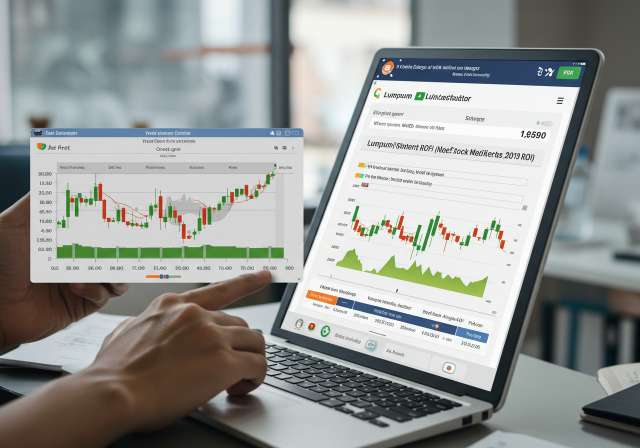
Unlock the Indian stock market! Learn how to open an online account to buy shares in India. Compare brokers, understand KYC, and start investing with ease. Navi
Unlock the Indian stock market! Learn how to open an online account to buy shares in india. Compare brokers, understand KYC, and start investing with ease. Navigate NSE/BSE & build your wealth.
Demystifying Online Trading: Your Guide to Opening a Share Trading Account in India
Introduction: Embracing the Digital Revolution in Indian Investing
The Indian stock market is booming, and increasingly, investors are turning to the digital world to participate in this growth story. Gone are the days of cumbersome paperwork and manual trading. Today, opening an online account to buy shares in India is a streamlined and efficient process, empowering individuals to take control of their financial futures. This article will serve as your comprehensive guide to navigating this digital landscape, from understanding the basics to making informed investment decisions.
Why Opt for an Online Trading Account?
The advantages of opening an online trading account are numerous and compelling:
- Convenience: Trade from anywhere, anytime, using your computer, smartphone, or tablet.
- Speed: Execute trades quickly and efficiently, taking advantage of market opportunities as they arise.
- Cost-Effectiveness: Online brokers typically offer lower brokerage fees compared to traditional brokerage houses.
- Transparency: Access real-time market data, news, and analysis to make informed decisions.
- Accessibility: Even small investors can start with minimal investment amounts, making the market more accessible to all.
- Digital Records: Maintain digital records of all your transactions for easy tracking and reporting.
Understanding the Players: Brokers and Depositories
Before diving into the process, it’s crucial to understand the key players involved:
- Brokers: These are intermediaries licensed by SEBI (Securities and Exchange Board of India) that facilitate the buying and selling of securities on the stock exchanges (NSE and BSE). They provide you with the platform and tools to trade.
- Depositories (NSDL and CDSL): These institutions hold your shares in electronic form (dematerialized form). Think of them as banks for your shares.
Choosing the Right Broker: A Crucial Decision
Selecting the right broker is a critical step. Consider the following factors:
Brokerage Fees and Charges
Compare brokerage fees across different brokers. Look for flat fee models or percentage-based models and understand the associated charges like account maintenance fees, transaction charges, and other hidden costs.
Trading Platform and Tools
Evaluate the user-friendliness and functionality of the trading platform. Does it offer real-time quotes, charting tools, research reports, and other features that can help you make informed decisions?
Customer Support
Assess the quality of customer support offered by the broker. Is it responsive and helpful? Are there multiple channels of communication available (phone, email, chat)?
Investment Options
Ensure the broker offers access to the investment options you are interested in, such as equity shares, derivatives, mutual funds, IPOs, and bonds.
Brokerage Type: Discount vs. Full-Service
Understand the difference between discount brokers and full-service brokers. Discount brokers typically offer lower brokerage fees but limited research and advisory services. Full-service brokers provide research, advisory, and personalized services but charge higher brokerage fees. Choose the type that aligns with your needs and investment style.
Popular brokers in India include Zerodha, Upstox, Angel One, ICICI Direct, and HDFC Securities. Research and compare these brokers before making a decision.
Step-by-Step Guide to Opening an Online Trading Account
The process of opening an online trading account is generally straightforward:
- Choose a Broker: Based on your research, select a broker that meets your needs.
- Visit the Broker’s Website: Navigate to the broker’s website and look for the “Open Account” or “Sign Up” option.
- Fill Out the Application Form: Provide your personal details, including your name, address, date of birth, PAN number, bank account details, and nominee details.
- Complete KYC (Know Your Customer) Verification: This is a mandatory requirement by SEBI to verify your identity and address. You’ll need to upload scanned copies of your PAN card, Aadhaar card, proof of address (utility bill, bank statement), and a cancelled cheque. You may also need to complete an online video KYC process.
- Income Proof Submission: Depending on the investment segment you want to trade in (e.g., derivatives), you may need to submit income proof, such as your salary slip, bank statement, or ITR acknowledgement.
- E-Sign the Documents: Most brokers offer the option to e-sign the documents using your Aadhaar card and OTP authentication.
- Account Activation: Once your application is verified, your trading account will be activated.
- Fund Your Account: Transfer funds from your bank account to your trading account using NEFT, RTGS, IMPS, or UPI.
Essential Documents Required for Account Opening
Keep the following documents handy before you begin the application process:
- PAN Card: Mandatory for trading in securities.
- Aadhaar Card: Used for KYC verification and e-signing.
- Proof of Address: Aadhaar card, passport, driving license, utility bill, bank statement.
- Bank Account Details: Bank account number, IFSC code, cancelled cheque.
- Passport-Sized Photograph: Scanned copy for uploading.
- Income Proof (If Required): Salary slip, bank statement, ITR acknowledgement.
Understanding Dematerialization (Demat) Accounts
A Demat account is an electronic account that holds your shares in dematerialized form. It is linked to your trading account and is essential for buying and selling shares electronically. When you buy shares, they are credited to your Demat account, and when you sell shares, they are debited from your Demat account. Your online account to buy shares in india essentially interfaces with a Demat account.
Investing Wisely: A Beginner’s Guide
Now that you have your online trading account, it’s time to start investing. Here are some tips for beginners:
Start Small and Diversify
Begin with small investments and gradually increase your exposure to the market. Diversify your portfolio across different sectors and asset classes to reduce risk.
Understand Your Risk Tolerance
Assess your risk tolerance and choose investments that align with your comfort level. If you are risk-averse, consider investing in less volatile instruments like debt mutual funds or government bonds. If you are comfortable with higher risk, you can consider investing in equity shares or equity mutual funds.
Do Your Research
Before investing in any stock, research the company’s fundamentals, financials, and industry trends. Understand the business model, management team, and growth prospects.
Consider SIPs (Systematic Investment Plans)
SIPs allow you to invest a fixed amount regularly in mutual funds. This helps you to average out your investment cost and benefit from rupee cost averaging.
Explore ELSS (Equity Linked Savings Scheme) for Tax Benefits
ELSS funds are equity mutual funds that offer tax benefits under Section 80C of the Income Tax Act. They have a lock-in period of three years, the shortest among all tax-saving investment options.
Don’t Chase Quick Profits
Avoid the temptation of chasing quick profits or following market rumors. Invest for the long term and focus on building a solid portfolio.
Monitor Your Investments Regularly
Track your portfolio’s performance regularly and make adjustments as needed. Rebalance your portfolio periodically to maintain your desired asset allocation.
Seek Professional Advice
If you are unsure about any aspect of investing, seek professional advice from a financial advisor.
Investing in Mutual Funds Online
Online trading accounts also allow you to invest in mutual funds. You can choose from a wide range of mutual fund schemes based on your investment objectives and risk tolerance. You can invest in lump sum or through SIPs. Popular mutual fund categories include equity funds, debt funds, hybrid funds, and index funds.
Other Investment Options Available Online
Besides equity shares and mutual funds, you can also invest in other investment options through your online trading account, such as:
- IPOs (Initial Public Offerings): Invest in newly listed companies on the stock exchange.
- Bonds: Invest in debt instruments issued by companies or the government.
- NPS (National Pension System): A retirement savings scheme managed by the Pension Fund Regulatory and Development Authority (PFRDA).
- PPF (Public Provident Fund): A long-term savings scheme offered by the government with tax benefits.
Staying Informed and Vigilant
The stock market is dynamic and requires continuous learning. Stay updated on market trends, economic news, and company-specific information. Be wary of fraudulent schemes and unsolicited investment advice. Always verify the credentials of any investment advisor or firm before entrusting them with your money.
Conclusion: Empowering Your Financial Future
Opening an online trading account is a significant step towards empowering your financial future. By following the steps outlined in this guide and making informed investment decisions, you can navigate the Indian stock market with confidence and achieve your financial goals. Remember to be patient, disciplined, and focused on long-term growth. Happy investing!