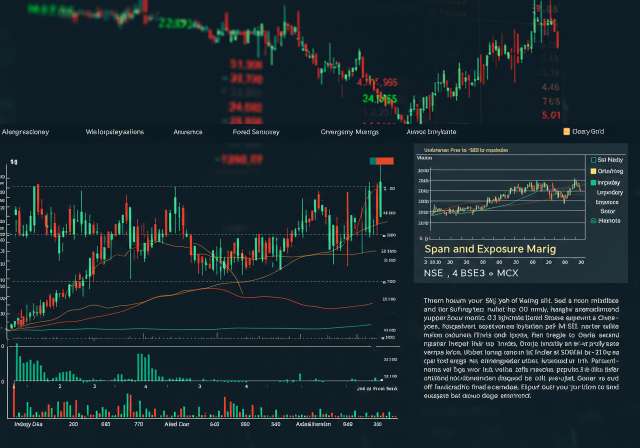
Demystifying Derivatives Trading in India: A comprehensive guide to understanding futures, options, and their role in the Indian financial markets. Learn about
Demystifying derivatives trading in India: A comprehensive guide to understanding futures, options, and their role in the Indian financial markets. Learn about hedging, speculation, and risk management.
Decoding Derivatives: A Beginner’s Guide to Trading in India
Introduction to Derivatives: What Are They?
In the dynamic world of Indian finance, understanding different investment avenues is crucial for building a robust portfolio. One such avenue, often perceived as complex, is derivatives. Put simply, a derivative is a financial contract whose value is derived from an underlying asset. This asset can be anything from stocks and bonds to commodities and currencies. Think of it as betting on the future price movement of something else.
In India, derivatives trading takes place primarily on exchanges like the National Stock Exchange (NSE) and the Bombay Stock Exchange (BSE). SEBI, the Securities and Exchange Board of India, regulates this market to ensure fair practices and investor protection.
Types of Derivatives Commonly Traded in India
The Indian derivatives market offers a variety of instruments, each with its own characteristics and applications. Here are some of the most common types:
Futures Contracts
A futures contract is an agreement to buy or sell an asset at a predetermined price on a specified future date. Both parties are obligated to fulfill the contract, regardless of the market price at expiration. For instance, you might enter into a futures contract to buy Nifty 50 at a certain price in the next month. If you believe the Nifty will rise, you’d buy (go long); if you anticipate a fall, you’d sell (go short).
- Advantages: Offer leverage, allowing you to control a larger position with a smaller initial investment (margin).
- Disadvantages: High leverage also amplifies losses. Marked-to-market daily, meaning profits and losses are realized daily.
Options Contracts
An options contract gives the buyer the right, but not the obligation, to buy or sell an asset at a specific price (the strike price) on or before a specific date (the expiration date). There are two main types of options:
- Call Options: Give the buyer the right to buy the underlying asset. Profitable if the price rises above the strike price plus the premium paid for the option.
- Put Options: Give the buyer the right to sell the underlying asset. Profitable if the price falls below the strike price minus the premium paid for the option.
Options are often used for hedging existing investments or for speculation. The premium paid for the option is the maximum loss the buyer can incur.
Index Derivatives
These derivatives are based on market indices such as the Nifty 50 or the Bank Nifty. They allow investors to bet on the overall direction of the market rather than individual stocks. They are particularly popular among institutional investors and those seeking to hedge their equity portfolios.
Currency Derivatives
Currency derivatives are based on exchange rates between different currencies. They are used by businesses involved in international trade and investment to manage currency risk. They also offer opportunities for speculation on currency movements.
Why Trade Derivatives? Key Applications
Derivatives serve several important functions in the financial market:
Hedging
Hedging involves using derivatives to reduce the risk of losses from adverse price movements in the underlying asset. For example, a farmer might use futures contracts to lock in a price for their crops, protecting them from a potential price decline before harvest. Similarly, an investor holding a large portfolio of stocks might buy put options on the Nifty 50 to protect against a market downturn.
Speculation
Speculation involves taking a position in a derivative with the expectation of profiting from future price movements. Speculators play a crucial role in providing liquidity to the market. However, it is crucial to remember that speculation involves high risk, and losses can be substantial.
Arbitrage
Arbitrage involves exploiting price differences of the same asset or derivative in different markets to make a risk-free profit. While arbitrage opportunities are less common in today’s highly efficient markets, they still exist and are actively pursued by sophisticated traders.
Understanding the Risks of Derivatives Trading
While derivatives offer potential benefits, it’s crucial to be aware of the inherent risks involved:
- Leverage: Derivatives provide high leverage, meaning a small investment can control a large position. While this can amplify profits, it can also magnify losses significantly.
- Complexity: Derivatives can be complex instruments, requiring a thorough understanding of their mechanics and market dynamics.
- Volatility: Derivatives markets can be highly volatile, leading to rapid price fluctuations and potential losses.
- Counterparty Risk: In some derivative contracts, there is a risk that the other party may default on their obligations.
- Liquidity Risk: Some derivatives markets may have limited liquidity, making it difficult to buy or sell positions quickly at desired prices.
Derivatives Trading Strategies for Indian Investors
Several strategies can be employed when trading derivatives. Here are a few basic examples:
Covered Call
This strategy involves holding an underlying asset (e.g., shares of a company) and selling call options on that asset. The investor earns a premium from selling the call option, providing some downside protection. However, the investor may miss out on potential gains if the price of the underlying asset rises significantly.
Protective Put
This strategy involves buying put options on an underlying asset that you already own. This provides downside protection, as the put option will increase in value if the price of the underlying asset falls. This is similar to buying insurance for your stock portfolio.
Straddle
This strategy involves simultaneously buying a call option and a put option with the same strike price and expiration date. This is typically used when the investor expects a significant price movement in the underlying asset, but is unsure of the direction. This strategy is profitable if the price moves significantly in either direction, but loses money if the price remains relatively stable.
Spread
This strategy involves buying and selling options of the same type (call or put) but with different strike prices or expiration dates. Spreads are used to limit risk and potential profit. An example would be a bull call spread (buying a call option at a lower strike price and selling a call option at a higher strike price). This allows you to profit from an upward movement while limiting your potential losses.
How to Start Trading Derivatives in India
If you’re considering trading derivatives in India, here are the steps you need to take:
- Open a Demat and Trading Account: You’ll need a Demat account to hold your securities and a trading account with a SEBI-registered broker to execute your trades. Popular brokers in India include Zerodha, Upstox, and Angel One.
- Complete KYC: Comply with the Know Your Customer (KYC) requirements of your broker.
- Risk Assessment: Honestly assess your risk tolerance and investment goals. Derivatives trading is not suitable for all investors.
- Margin Requirements: Understand the margin requirements for trading derivatives. You’ll need to deposit a certain percentage of the contract value as margin with your broker.
- Start Small: Begin with small positions and gradually increase your exposure as you gain experience and confidence.
- Continuous Learning: Stay updated on market trends, regulations, and trading strategies. Attend webinars, read books, and follow reputable financial news sources.
Tax Implications of Derivatives Trading in India
The taxation of derivatives trading in India depends on whether you are engaged in it as a business or as an investment. Generally, profits from derivatives trading are treated as speculative business income or non-speculative business income depending on the specifics of the transactions. Consult a tax advisor to understand the specific implications for your situation. It’s important to maintain accurate records of your trades for tax purposes.
The Role of SEBI in Regulating Derivatives Markets
SEBI plays a crucial role in regulating the Indian derivatives market to ensure fair practices, prevent market manipulation, and protect investors. SEBI sets rules and regulations for exchanges, brokers, and participants in the derivatives market. It also monitors trading activity to detect and prevent insider trading and other fraudulent activities. SEBI’s regulations aim to maintain the integrity and stability of the derivatives market and promote investor confidence.
Derivatives vs. Other Investment Options: A Comparison
It’s important to understand how derivatives compare to other investment options available in India, such as equities, mutual funds, and fixed income investments. While derivatives offer the potential for high returns, they also come with higher risk. Equities offer long-term growth potential but can be volatile. Mutual funds provide diversification and professional management. Fixed income investments offer stability and predictable returns but may not keep pace with inflation. The best investment strategy depends on your individual risk tolerance, investment goals, and time horizon.
Conclusion: Is Derivatives Trading Right for You?
Derivatives can be powerful tools for hedging, speculation, and arbitrage. However, they are also complex instruments that require a thorough understanding of the risks involved. Before engaging in derivatives trading, it’s crucial to educate yourself, assess your risk tolerance, and start with small positions. If you’re unsure whether derivatives trading is right for you, consider seeking advice from a qualified financial advisor. Alternatives like SIPs in equity mutual funds, ELSS for tax saving, PPF and NPS offer more straightforward investment routes for beginner investors in India.