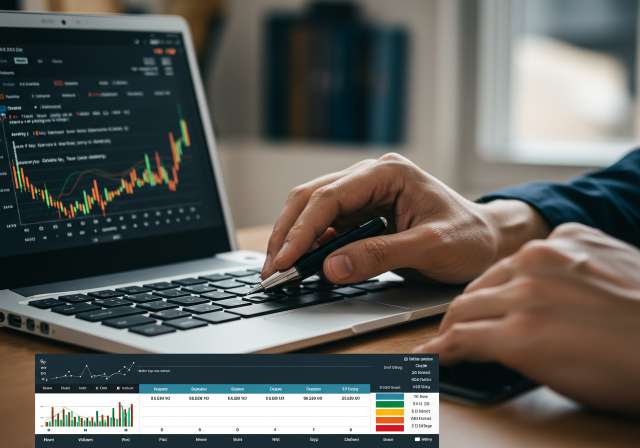
Tag: full service broker india

  • Finding Your Perfect Fit: Choosing the Best Stock Broker in India

    Finding Your Perfect Fit: Choosing the Best Stock Broker in India

    Navigating the Indian stock market? Finding the no.1 stock broker in India can be tricky! We’ll explore the top contenders, comparing fees, platforms, research

    Navigating the Indian stock market? Finding the no.1 stock broker in india can be tricky! We’ll explore the top contenders, comparing fees, platforms, research & more. Invest smarter, not harder!

    Finding Your Perfect Fit: Choosing the Best Stock Broker in India

    Introduction: The Importance of a Reliable Stock Broker

    The Indian equity markets offer immense potential for wealth creation, but navigating this landscape requires the right tools and guidance. A reliable stock broker is more than just a platform for buying and selling shares. They are your partner in your investment journey, providing access to research, educational resources, and the technology you need to make informed decisions.

    With a plethora of brokers vying for your attention, choosing the right one can feel overwhelming. Factors like brokerage fees, trading platforms, research quality, customer service, and the range of investment products offered all play a crucial role. This guide will delve into the key aspects to consider when selecting a stock broker in India, helping you make an informed decision aligned with your investment goals and risk tolerance.

    Key Considerations When Choosing a Stock Broker

    Before diving into specific brokerage firms, let’s outline the critical factors that should influence your choice:

    Brokerage Fees and Charges

    This is often the first thing investors look at. Understanding the fee structure is paramount. Brokers typically charge brokerage as a percentage of the traded value or a fixed fee per trade. Discount brokers often offer significantly lower brokerage rates compared to full-service brokers. Consider the following:

    • Percentage-based brokerage: A percentage of the transaction value (e.g., 0.1% on delivery trades).
    • Fixed-fee brokerage: A flat fee per trade, regardless of the transaction value (e.g., ₹20 per trade).
    • Account maintenance charges (AMC): Annual fees for maintaining your Demat and trading accounts.
    • Other charges: DP charges (for debiting shares from your Demat account), transaction charges levied by the exchanges (NSE and BSE), SEBI turnover fees, and GST.

    Example: If you trade stocks worth ₹50,000 and the brokerage is 0.1%, you’ll pay ₹50. If the brokerage is ₹20 per trade, you’ll pay ₹20, regardless of the trade value.

    Trading Platform and Technology

    A user-friendly and robust trading platform is essential for a seamless trading experience. Look for features such as:

    • Ease of use: Intuitive interface and easy navigation.
    • Real-time data: Up-to-date market information and price charts.
    • Advanced charting tools: Technical analysis tools for identifying trends and patterns.
    • Order types: Market orders, limit orders, stop-loss orders, etc.
    • Mobile app: Trading on the go via a dedicated mobile application.

    Research and Advisory Services

    While not essential for all investors, especially those who conduct their own research, access to high-quality research and advisory services can be invaluable, especially for beginners. Full-service brokers typically offer more comprehensive research reports than discount brokers. Consider the following:

    • Company research reports: In-depth analysis of individual companies, including financial performance, growth prospects, and valuation.
    • Sector analysis: Overview of various sectors and industries, identifying potential investment opportunities.
    • Investment recommendations: Buy, sell, and hold recommendations based on the broker’s research.
    • Personalized advisory: Tailored investment advice from a financial advisor.

    Investment Options

    Ensure the broker offers access to the investment instruments you’re interested in. Common investment options include:

    • Equity shares: Buying and selling shares of publicly listed companies on the NSE and BSE.
    • Derivatives: Trading in futures and options (F&O).
    • Commodities: Trading in commodities like gold, silver, and crude oil.
    • Currency derivatives: Trading in currency futures and options.
    • Mutual funds: Investing in diversified portfolios of stocks and bonds.
    • Initial Public Offerings (IPOs): Applying for shares in newly listed companies.

    Customer Service and Support

    Responsive and helpful customer service is crucial, especially when you encounter issues with your account or trading platform. Check for the availability of:

    • Phone support: Direct access to customer service representatives via phone.
    • Email support: Contacting customer service via email.
    • Online chat support: Real-time assistance through online chat.
    • Branch network: Physical branches for in-person assistance (typically offered by full-service brokers).

    Account Security and Regulations

    Security is paramount. Ensure the broker is registered with SEBI and adheres to all regulatory requirements. Look for security features such as:

    • Two-factor authentication: An extra layer of security requiring a one-time password (OTP) in addition to your regular password.
    • Data encryption: Protecting your personal and financial information with encryption technology.
    • Regular security audits: Independent security audits to identify and address vulnerabilities.

    Comparing Different Types of Stock Brokers in India

    Stock brokers in India can be broadly categorized into two main types:

    Full-Service Brokers

    Full-service brokers offer a comprehensive range of services, including research, advisory, and personalized support. They typically charge higher brokerage fees compared to discount brokers. Examples include traditional brokerage houses like:

    • ICICI Direct
    • HDFC Securities
    • Kotak Securities
    • Motilal Oswal

    Pros:

    • Extensive research and advisory services.
    • Personalized support from financial advisors.
    • Access to a wide range of investment products.
    • Branch network for in-person assistance.

    Cons:

    • Higher brokerage fees.
    • May not be suitable for experienced traders who don’t need research and advisory services.

    Discount Brokers

    Discount brokers offer a no-frills trading experience at significantly lower brokerage rates. They typically focus on providing a user-friendly trading platform and access to basic investment tools. Examples include:

    • Zerodha
    • Upstox
    • Groww
    • Angel One

    Pros:

    • Lower brokerage fees, often a fixed fee per trade or even zero brokerage for certain investments.
    • User-friendly trading platforms.
    • Suitable for experienced traders who don’t need extensive research and advisory services.

    Cons:

    • Limited research and advisory services.
    • Less personalized support.
    • May not offer access to all investment products.

    Beyond Brokerage: Other Investment Options to Consider

    While selecting a stock broker is crucial for equity investments, remember that a well-diversified portfolio should also include other asset classes. Here are some popular investment options in India:

    Mutual Funds

    Mutual funds are a popular way to invest in a diversified portfolio of stocks, bonds, or other assets. They are managed by professional fund managers and offer a convenient way to participate in the market. You can invest in mutual funds through:

    • Lump-sum investments: Investing a single large sum of money.
    • Systematic Investment Plans (SIPs): Investing a fixed amount of money regularly, typically monthly.

    Public Provident Fund (PPF)

    PPF is a government-backed savings scheme that offers tax benefits and a guaranteed return. It’s a popular choice for long-term savings.

    National Pension System (NPS)

    NPS is a retirement savings scheme that allows you to invest in a mix of equity, debt, and government securities. It offers tax benefits and is designed to provide a regular income stream after retirement.

    Equity Linked Savings Scheme (ELSS)

    ELSS is a type of mutual fund that invests primarily in equity and offers tax benefits under Section 80C of the Income Tax Act. It has a lock-in period of 3 years, the shortest among all tax-saving investment options.

    Making the Right Choice: A Step-by-Step Guide

    Here’s a step-by-step guide to help you choose the best stock broker for your needs:

    1. Define your investment goals: What are you trying to achieve with your investments? Are you saving for retirement, a down payment on a house, or something else?
    2. Assess your risk tolerance: How much risk are you willing to take with your investments? Are you a conservative, moderate, or aggressive investor?
    3. Determine your investment style: Are you a passive investor who prefers to invest in index funds or a more active investor who likes to research and select individual stocks?
    4. Compare brokerage fees: Compare the brokerage fees charged by different brokers and choose one that fits your budget.
    5. Evaluate trading platforms: Test out the trading platforms offered by different brokers and choose one that is user-friendly and meets your needs.
    6. Consider research and advisory services: If you need research and advisory services, choose a broker that offers these services.
    7. Check customer service: Read reviews and check the customer service ratings of different brokers.
    8. Open an account: Once you’ve chosen a broker, open an account and start investing!

    Conclusion: Empowering Your Investment Journey

    Choosing the right stock broker is a crucial step towards achieving your financial goals. By carefully considering the factors outlined in this guide and comparing different brokers, you can find one that meets your needs and helps you navigate the Indian equity markets with confidence. Remember that the “no.1 stock broker in india” for one person might not be the best for another. Focus on finding the broker that aligns perfectly with your individual needs, investment style, and financial goals. Remember to also diversify your portfolio by considering other investment avenues like mutual funds, PPF, and NPS, in addition to equities.

  • Choosing the Right Stock Broker Company in India: A Comprehensive Guide

    Choosing the Right Stock Broker Company in India: A Comprehensive Guide

    Confused about choosing the right stock broker company in India? This comprehensive guide explores top brokers, demystifies fees, account types & helps you pick

    Confused about choosing the right stock broker company in india? This comprehensive guide explores top brokers, demystifies fees, account types & helps you pick the best fit for your investment journey. Start investing wisely today!

    Choosing the Right Stock Broker Company in India: A Comprehensive Guide

    Introduction: Navigating the Indian Stock Market Landscape

    The Indian stock market, fueled by the Bombay Stock Exchange (BSE) and the National Stock Exchange (NSE), presents a wealth of opportunities for investors. Whether you’re a seasoned trader or a newbie dipping your toes into the world of equity, choosing the right stock broker is paramount. A good broker acts as your gateway to the market, providing the platform, tools, and sometimes even the guidance you need to make informed investment decisions. This article delves into the intricacies of selecting a suitable stock broker company in India, covering key considerations, types of brokers, and essential features to look for.

    Understanding the Role of a Stock Broker

    A stock broker is a financial intermediary that facilitates the buying and selling of securities, such as stocks, bonds, mutual funds, and ETFs, on behalf of their clients. They execute trades, provide access to market data, and offer research and analysis to help investors make informed choices. In India, all stock brokers must be registered with the Securities and Exchange Board of India (SEBI), the regulatory body responsible for overseeing the securities market and protecting investor interests.

    Types of Stock Brokers in India

    Stock brokers in India can be broadly classified into two categories:

    • Full-Service Brokers: These brokers offer a comprehensive suite of services, including investment advice, research reports, portfolio management, and access to a wide range of investment products, including equities, derivatives, commodities, and mutual funds. They typically charge higher brokerage fees.
    • Discount Brokers: Also known as budget brokers, these brokers focus on providing a low-cost trading platform. They generally do not offer investment advice or research reports, but they provide access to online trading platforms and charge significantly lower brokerage fees. This makes them attractive to experienced traders who do not require extensive support.

    Key Considerations When Choosing a Stock Broker

    Selecting the right stock broker involves careful consideration of various factors. Here are some key aspects to evaluate:

    1. Brokerage Fees and Charges

    Brokerage fees are the charges levied by the broker for executing trades. These fees can significantly impact your returns, especially if you trade frequently. Understand the different types of brokerage plans available:

    • Percentage-Based Brokerage: The broker charges a fixed percentage of the transaction value as brokerage.
    • Flat Fee Brokerage: The broker charges a fixed fee per trade, regardless of the transaction value.
    • Zero Brokerage: Some brokers offer zero brokerage on equity delivery trades but may charge a nominal fee for intraday trades.

    Also, consider other charges such as account opening fees, annual maintenance charges (AMC), Demat account charges, and transaction charges. Compare the fee structures of different brokers to identify the most cost-effective option for your trading style.

    2. Trading Platform and Technology

    The trading platform is your primary interface with the stock market. Look for a platform that is user-friendly, reliable, and offers a range of features, including:

    • Real-Time Market Data: Access to live stock prices, charts, and market news.
    • Advanced Charting Tools: Technical analysis tools to identify trading opportunities.
    • Order Placement Options: Different order types, such as market orders, limit orders, and stop-loss orders.
    • Mobile Trading App: Ability to trade on the go using a mobile app.
    • Alerts and Notifications: Customizable alerts for price movements and other market events.

    3. Research and Advisory Services

    If you are new to investing or require guidance, consider brokers that offer research reports, investment recommendations, and advisory services. These services can help you identify potential investment opportunities and make informed decisions. However, remember to conduct your own due diligence before acting on any recommendations.

    4. Account Types and Investment Options

    Ensure that the broker offers the account types and investment options that align with your investment goals. Common account types include:

    • Trading Account: Required for buying and selling securities.
    • Demat Account: Required for holding securities in electronic form.
    • Commodities Account: Required for trading in commodities.
    • Mutual Fund Account: Required for investing in mutual funds.

    Also, check if the broker offers access to other investment products, such as Initial Public Offerings (IPOs), Sovereign Gold Bonds (SGBs), and Exchange Traded Funds (ETFs).

    5. Customer Support

    Reliable customer support is crucial, especially when you encounter technical issues or have questions about your account. Look for brokers that offer multiple channels of support, such as phone, email, and live chat. Check customer reviews and ratings to assess the quality of their customer service.

    6. Security and Reliability

    Security is paramount when choosing a stock broker. Ensure that the broker is registered with SEBI and follows industry best practices for data security. Look for features such as two-factor authentication and encryption to protect your account from unauthorized access.

    Top Stock Brokers in India (Illustrative Examples)

    The Indian stock broking industry is competitive, with numerous players offering a range of services. Here are a few examples of well-known stock brokers in India, categorized by their type:

    Full-Service Brokers (Examples):

    • ICICI Direct: Offers a wide range of investment products, research reports, and personalized advisory services.
    • HDFC Securities: Provides comprehensive research and analysis, along with access to various investment options.
    • Kotak Securities: Offers a user-friendly trading platform and a range of investment services.

    Discount Brokers (Examples):

    • Zerodha: A popular discount broker known for its low brokerage fees and user-friendly platform.
    • Upstox: Another prominent discount broker offering a simple and efficient trading experience.
    • Groww: A relatively new player in the market, focusing on providing a seamless investment experience for beginners.
    • Angel One: Combines aspects of both full-service and discount broking, offering research and advisory at a competitive price.

    Disclaimer: This is not an exhaustive list, and the best broker for you will depend on your individual needs and preferences. It’s crucial to conduct thorough research before making a decision.

    Investing in Mutual Funds Through Stock Brokers

    Many stock brokers also offer the option to invest in mutual funds. This can be a convenient way to diversify your portfolio and access professional fund management. You can invest in mutual funds through Systematic Investment Plans (SIPs) or lump-sum investments. Brokers typically offer access to a wide range of mutual fund schemes, including equity funds, debt funds, and hybrid funds.

    When choosing a mutual fund, consider your investment goals, risk tolerance, and investment horizon. Also, pay attention to the fund’s expense ratio and historical performance. Remember that past performance is not indicative of future results.

    Tax Implications of Investing Through a Stock Broker

    Investing in the stock market and mutual funds has tax implications. Understanding these implications is crucial for effective financial planning.

    • Capital Gains Tax: Profits from the sale of shares and mutual fund units are subject to capital gains tax. The tax rate depends on the holding period and the type of asset. Short-term capital gains (held for less than one year for equity shares and equity mutual funds) are taxed at a higher rate than long-term capital gains (held for more than one year).
    • Dividend Income: Dividend income from stocks and mutual funds is taxable in the hands of the investor.
    • Securities Transaction Tax (STT): STT is a tax levied on the purchase and sale of securities on the stock exchange.

    Consider consulting a tax advisor to understand the tax implications of your investments and optimize your tax planning.

    Alternative Investment Options Available Through Stock Brokers

    Beyond stocks and mutual funds, many stock brokers also provide access to alternative investment options, such as:

    • Sovereign Gold Bonds (SGBs): Government-backed bonds that offer a safe and convenient way to invest in gold.
    • Exchange Traded Funds (ETFs): Funds that track a specific index or commodity, offering diversification and liquidity.
    • Initial Public Offerings (IPOs): Opportunities to invest in companies that are going public for the first time.
    • National Pension System (NPS): A retirement savings scheme offered by the government, providing tax benefits and long-term growth potential.

    Protecting Yourself from Stock Market Scams

    The stock market can be risky, and it’s essential to be aware of potential scams and fraudulent activities. Here are some tips to protect yourself:

    • Be wary of unsolicited investment advice: Do not rely on tips or recommendations from unknown sources.
    • Verify the broker’s registration: Ensure that the broker is registered with SEBI.
    • Protect your account credentials: Do not share your login details with anyone.
    • Monitor your account regularly: Check your account statements and transactions frequently.
    • Report any suspicious activity: If you suspect any fraudulent activity, report it to SEBI immediately.

    Conclusion: Making an Informed Choice

    Choosing the right stock broker company in India is a crucial step towards achieving your financial goals. By carefully considering the factors discussed in this article, you can select a broker that aligns with your investment needs, trading style, and risk tolerance. Remember to conduct thorough research, compare different brokers, and choose a platform that provides the tools, resources, and support you need to succeed in the Indian stock market. Happy investing!