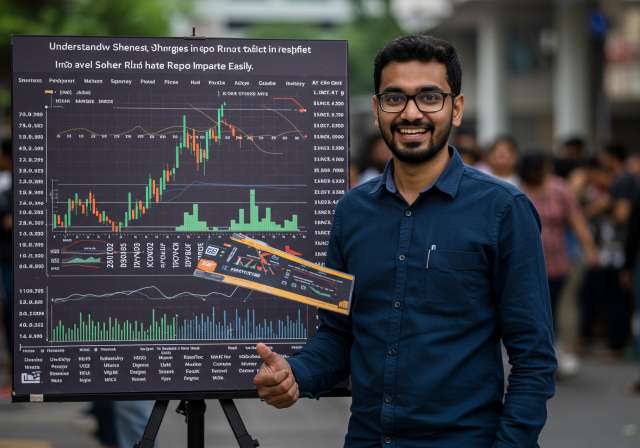
Tag: trading options

  • Decoding the Option Chain: Your Key to Profitable Trading in India

    Decoding the Option Chain: Your Key to Profitable Trading in India

    Unlock trading secrets with the Option Chain! Learn to decipher NSE/BSE data, analyze calls/puts, predict market trends & manage risk. Master option trading tod

    Unlock trading secrets with the option chain! Learn to decipher NSE/BSE data, analyze calls/puts, predict market trends & manage risk. Master option trading today!

    Decoding the Option Chain: Your Key to Profitable Trading in India

    Introduction: Navigating the World of Options Trading in India

    The Indian stock market, with its increasing sophistication and participation, offers a plethora of investment avenues. Among these, options trading stands out as a powerful tool, capable of generating significant returns when wielded with knowledge and strategy. However, the world of options can seem daunting, filled with jargon and complex data. One of the most crucial tools for navigating this complexity is understanding the option chain. It’s your window into the heart of options market activity, revealing sentiment, identifying potential support and resistance levels, and providing insights for informed trading decisions on the NSE and BSE.

    What is an Option Chain? Demystifying the Data

    Think of the option chain as a comprehensive table showcasing all available option contracts for a specific underlying asset, like Reliance Industries, HDFC Bank, or even the Nifty 50 index. It’s a dynamic real-time snapshot of the market, displaying a range of information for both call and put options at various strike prices. This information includes:

    • Strike Price: The price at which the option buyer has the right to buy (call option) or sell (put option) the underlying asset.
    • Call Options: Contracts that give the buyer the right, but not the obligation, to buy the underlying asset at the strike price on or before the expiration date.
    • Put Options: Contracts that give the buyer the right, but not the obligation, to sell the underlying asset at the strike price on or before the expiration date.
    • Last Traded Price (LTP): The most recent price at which the option contract was traded.
    • Change in Price: The difference between the LTP and the previous day’s closing price.
    • Bid Price: The highest price a buyer is willing to pay for the option contract.
    • Ask Price: The lowest price a seller is willing to accept for the option contract.
    • Volume: The number of option contracts traded during the day.
    • Open Interest (OI): The total number of outstanding option contracts for a particular strike price. This is a vital indicator of market sentiment and potential price movements.
    • Implied Volatility (IV): A measure of the market’s expectation of future price volatility of the underlying asset. Higher IV suggests greater uncertainty and potentially larger price swings.

    Why is the Option Chain Important for Indian Traders?

    The option chain isn’t just a collection of numbers; it’s a powerful tool that provides valuable insights for Indian traders. Understanding and analyzing this data can significantly improve your trading strategies and risk management.

    1. Identifying Support and Resistance Levels

    Open interest (OI) is a crucial indicator for identifying potential support and resistance levels. A large build-up of OI on call options at a particular strike price suggests that many traders believe the price will not rise above that level, acting as a potential resistance. Conversely, a large build-up of OI on put options at a particular strike price suggests that many traders believe the price will not fall below that level, acting as a potential support. These levels can be valuable for setting stop-loss orders and profit targets.

    2. Gauging Market Sentiment

    The option chain helps you understand the overall market sentiment. By analyzing the OI data for both call and put options, you can determine whether the market is bullish (expecting prices to rise), bearish (expecting prices to fall), or neutral. For example, a higher OI in call options compared to put options might indicate a bullish sentiment, while the opposite suggests a bearish sentiment.

    3. Identifying Potential Trading Opportunities

    Changes in OI can signal potential trading opportunities. For example, a significant increase in OI on call options at a particular strike price, accompanied by a price increase, could indicate a potential breakout and a buying opportunity. Conversely, a significant increase in OI on put options, along with a price decrease, could indicate a potential breakdown and a selling opportunity.

    4. Assessing Risk

    Implied volatility (IV) is a key indicator of market risk. Higher IV suggests that the market expects larger price swings, indicating a higher level of risk. Understanding IV can help you adjust your position sizes and risk management strategies accordingly.

    How to Analyze the Option Chain: A Step-by-Step Guide

    Analyzing the option chain might seem complex at first, but with a systematic approach, it can become a valuable skill. Here’s a step-by-step guide:

    1. Choose Your Underlying Asset

    Select the underlying asset you want to trade, such as Reliance, TCS, or the Nifty 50 index. Access the option chain data from the NSE or BSE website, or through your brokerage platform.

    2. Focus on Open Interest (OI)

    Pay close attention to the OI data for both call and put options. Look for strike prices with significantly higher OI compared to others. These levels often act as potential support and resistance.

    3. Analyze Changes in OI

    Monitor the changes in OI over time. A significant increase in OI on call options, particularly near the current market price, could signal a potential resistance level. Similarly, a significant increase in OI on put options could signal a potential support level.

    4. Consider Implied Volatility (IV)

    Check the IV levels for different strike prices. High IV suggests greater uncertainty and potentially larger price swings. This can help you determine the appropriate option strategy and manage your risk.

    5. Look at Volume and LTP

    Volume can confirm the strength of support and resistance levels suggested by OI. A high volume at a specific strike price reinforces the significance of that level. LTP and changes in LTP help in understanding the immediate price action in the options market.

    Integrating the Option Chain with Other Analysis Techniques

    The option chain is most effective when used in conjunction with other analysis techniques, such as:

    1. Technical Analysis

    Combine option chain data with technical indicators like moving averages, RSI, and MACD to confirm trading signals and identify potential entry and exit points. For example, if the option chain suggests a strong resistance level at a price where a technical indicator also indicates overbought conditions, the resistance level is likely to be even stronger.

    2. Fundamental Analysis

    Use fundamental analysis to determine the long-term outlook for the underlying asset. Then, use the option chain to find suitable entry and exit points for your options trades based on your fundamental view. For example, if you believe a company’s earnings will be strong, you can use the option chain to identify call options that offer the best risk-reward ratio.

    3. News and Events

    Keep track of important news and events that could affect the price of the underlying asset. The option chain can help you anticipate how the market will react to these events and adjust your trading strategies accordingly. For example, before a major earnings announcement, the option chain might show an increase in implied volatility, reflecting the market’s uncertainty about the outcome.

    Risk Management Considerations

    Options trading can be highly rewarding, but it also involves significant risks. Here are some key risk management considerations:

    • Limited Lifespan: Options contracts have a limited lifespan and expire on a specific date. If the underlying asset doesn’t move in your favor by the expiration date, your option will become worthless.
    • Time Decay (Theta): Options lose value over time, especially as they approach their expiration date. This is known as time decay or theta.
    • Volatility Risk (Vega): Changes in implied volatility can significantly affect the price of options. A decrease in IV can reduce the value of your options, even if the underlying asset moves in your favor.
    • Leverage: Options offer leverage, which means you can control a large amount of the underlying asset with a relatively small investment. While leverage can amplify your profits, it can also magnify your losses.

    To manage these risks, it’s essential to:

    • Understand Options Strategies: Choose appropriate options strategies based on your risk tolerance and market outlook. Some common strategies include buying calls or puts, selling covered calls, and using spreads.
    • Set Stop-Loss Orders: Always set stop-loss orders to limit your potential losses.
    • Manage Position Size: Don’t risk more than you can afford to lose on any single trade.
    • Monitor Your Positions Regularly: Keep a close eye on your options positions and adjust them as needed based on market conditions.

    The Option Chain in the Context of Indian Investments (SIPs, Mutual Funds, ELSS, PPF, NPS)

    While investment instruments like SIPs, mutual funds, ELSS (Equity Linked Savings Scheme), PPF (Public Provident Fund), and NPS (National Pension System) are geared towards long-term wealth creation with relatively lower risk, understanding the derivatives market, including the , can offer insights into market sentiment and potential hedging strategies, even for long-term investors.

    For example, a mutual fund manager might use options to hedge their portfolio against potential market downturns. Similarly, an individual investor with a large equity portfolio could use put options to protect against potential losses. While direct options trading might not be suitable for all investors, understanding the option chain can provide a valuable perspective on market risks and opportunities.

    Conclusion: Mastering the Option Chain for Profitable Trading

    The option chain is a powerful tool that can significantly enhance your options trading skills. By understanding how to analyze the data, identify support and resistance levels, gauge market sentiment, and manage risk, you can increase your chances of success in the Indian options market. Remember that options trading involves risk, and it’s essential to have a solid understanding of the market and appropriate risk management strategies before you start trading. Continuous learning and practice are crucial for mastering the art of options trading and achieving consistent profitability.

  • Options Trading: A Comprehensive Guide for Indian Investors

    Options Trading: A Comprehensive Guide for Indian Investors

    Demystifying Options Trading in India: A comprehensive guide for beginners and seasoned investors. Learn about strategies, risks, and how to navigate the Indian

    Demystifying options trading in India: A comprehensive guide for beginners and seasoned investors. Learn about strategies, risks, and how to navigate the Indian options market, maximizing your returns on NSE & BSE.

    Options Trading: A Comprehensive Guide for Indian Investors

    Introduction to Options Trading in the Indian Market

    The Indian financial market is becoming increasingly sophisticated, offering a wide array of investment avenues. Among these, options trading stands out as a potentially lucrative, albeit complex, domain. This guide aims to demystify options trading for Indian investors, providing a comprehensive understanding of its mechanics, strategies, and risk management techniques, all within the context of the Indian financial ecosystem governed by SEBI and traded on exchanges like the NSE and BSE.

    Understanding the Basics: Calls, Puts, and the Underlying Asset

    At its core, options trading involves contracts that give the buyer the right, but not the obligation, to buy or sell an underlying asset at a predetermined price (the strike price) on or before a specific date (the expiration date). These underlying assets can include stocks listed on the NSE, indices like the Nifty 50 and Sensex, commodities, or even currencies. Two primary types of options contracts exist:

    • Call Options: A call option grants the buyer the right to buy the underlying asset at the strike price. Investors typically buy call options when they anticipate the price of the underlying asset will increase.
    • Put Options: A put option grants the buyer the right to sell the underlying asset at the strike price. Investors typically buy put options when they anticipate the price of the underlying asset will decrease.

    It’s crucial to understand the terminology associated with options trading:

    • Strike Price: The predetermined price at which the underlying asset can be bought or sold.
    • Expiration Date: The date on which the option contract expires. After this date, the option is no longer valid.
    • Premium: The price the buyer pays to the seller for the option contract.
    • Underlying Asset: The asset that the option contract is based on (e.g., a stock, index, or commodity).
    • In the Money (ITM): A call option is ITM when the underlying asset’s price is above the strike price. A put option is ITM when the underlying asset’s price is below the strike price.
    • At the Money (ATM): An option is ATM when the underlying asset’s price is equal to the strike price.
    • Out of the Money (OTM): A call option is OTM when the underlying asset’s price is below the strike price. A put option is OTM when the underlying asset’s price is above the strike price.

    Key Participants in Options Trading

    The options market involves various participants, each with a distinct role:

    • Buyers (Holders): Those who purchase options contracts, gaining the right to buy or sell the underlying asset.
    • Sellers (Writers): Those who sell options contracts, obligated to fulfill the terms of the contract if the buyer exercises their right.
    • Brokers: Intermediaries facilitating the buying and selling of options contracts. Many discount brokers in India offer sophisticated platforms for trading.
    • Market Makers: Entities that provide liquidity to the market by quoting bid and ask prices for options contracts.

    Strategies for Options Trading in the Indian Context

    Options trading offers a range of strategies to suit different risk appetites and market views. Here are a few common strategies:

    1. Buying Call Options (Long Call)

    This is a basic strategy used when you expect the price of the underlying asset to rise. You buy a call option, hoping the price will increase above the strike price plus the premium paid. Your profit potential is unlimited, while your maximum loss is limited to the premium paid.

    2. Buying Put Options (Long Put)

    This strategy is employed when you anticipate a decline in the price of the underlying asset. You buy a put option, hoping the price will fall below the strike price minus the premium paid. Your profit potential is substantial, while your maximum loss is limited to the premium paid.

    3. Covered Call

    This strategy involves owning shares of the underlying asset and selling (writing) a call option on those shares. It’s a conservative strategy used to generate income from your existing stock holdings. Your profit is limited to the premium received and the difference between the stock’s purchase price and the strike price. Your risk is that the stock price could fall.

    4. Protective Put

    This strategy is used to protect your stock holdings from a potential price decline. You buy a put option on the shares you own. It’s like buying insurance for your portfolio. The cost of the put option is the premium paid, but it limits your potential losses if the stock price falls.

    5. Straddle

    A straddle involves simultaneously buying a call option and a put option with the same strike price and expiration date. This strategy is used when you expect a significant price movement in the underlying asset but are unsure of the direction. The profit potential is unlimited if the price moves significantly in either direction. However, it’s a relatively costly strategy because you’re paying premiums for both a call and a put.

    6. Strangle

    Similar to a straddle, a strangle involves simultaneously buying a call option and a put option with the same expiration date, but the call option has a strike price higher than the current price, and the put option has a strike price lower than the current price of the underlying security. This strategy is less expensive than a straddle to implement, and is profitable if the underlying asset makes a large move.

    Risk Management in Options Trading

    Options trading, while potentially profitable, involves significant risks. Effective risk management is crucial for success. Here are some key risk management techniques:

    • Position Sizing: Carefully determine the amount of capital you allocate to each trade. Avoid risking a significant portion of your portfolio on a single trade.
    • Stop-Loss Orders: Set stop-loss orders to automatically exit a trade if the price moves against you. This helps limit your potential losses.
    • Understanding the Greeks: The “Greeks” (Delta, Gamma, Theta, Vega, and Rho) are measures of the sensitivity of an option’s price to various factors. Understanding the Greeks is essential for managing risk effectively.
    • Volatility Management: Options prices are heavily influenced by volatility. Be aware of implied volatility levels and how they can affect your trades.
    • Time Decay (Theta): Options lose value as they approach their expiration date. This is known as time decay. Be mindful of time decay, especially when holding options close to expiration.

    Options Trading and Tax Implications in India

    Profits from options trading are generally considered speculative income and are taxed at the applicable income tax slab rate. However, if you engage in frequent and substantial options trading activity, the Income Tax Department may consider it a business activity. In that case, the profits would be taxed as business income.

    It is advisable to consult with a qualified tax advisor to understand the specific tax implications of your options trading activities in India. Keeping accurate records of your trades is crucial for accurate tax reporting.

    Choosing a Broker for Options Trading in India

    Selecting the right broker is essential for a smooth and efficient options trading experience. Consider the following factors when choosing a broker:

    • Brokerage Fees: Compare brokerage fees across different brokers. Look for brokers with competitive rates for options trading.
    • Trading Platform: Choose a broker with a user-friendly and reliable trading platform that provides real-time market data, charting tools, and order execution capabilities.
    • Margin Requirements: Understand the margin requirements for options trading. Ensure you have sufficient funds in your trading account to meet these requirements.
    • Customer Support: Opt for a broker that offers responsive and helpful customer support.
    • Regulatory Compliance: Ensure the broker is registered with SEBI and complies with all relevant regulations.

    The Role of SEBI in Regulating Options Trading

    The Securities and Exchange Board of India (SEBI) plays a vital role in regulating the Indian financial markets, including options trading. SEBI’s primary objectives are to protect the interests of investors, promote the development of the securities market, and regulate and oversee the functioning of the market. SEBI sets rules and regulations for options trading, monitors market activity, and takes action against any malpractices or violations.

    Conclusion: Navigating the World of Options Trading

    Options trading can be a rewarding endeavor for Indian investors who are willing to dedicate the time and effort to understand its complexities. By mastering the basics, developing effective strategies, managing risk prudently, and staying informed about market developments and regulatory changes, you can increase your chances of success in the dynamic world of the options market. Remember to approach it with a long-term perspective, continuous learning, and a disciplined approach to risk management. Understanding the complexities, developing clear strategies, and focusing on risk management are keys to success, whether you prefer investing in direct equity or using the leverage of Options Trading.

  • Options Trading: A Beginner’s Guide for Indian Investors

    Options Trading: A Beginner’s Guide for Indian Investors

    Demystifying Options Trading: Your guide to navigating the Indian markets. Learn about call & put options, strategies, risk management & how to trade options re

    Demystifying options trading: Your guide to navigating the Indian markets. Learn about call & put options, strategies, risk management & how to trade options responsibly on NSE & BSE for potential profits. OptionsTrading IndianMarkets

    Options Trading: A Beginner’s Guide for Indian Investors

    Introduction: Unlocking Potential with Options

    The Indian financial market offers a plethora of investment avenues, ranging from the familiar comfort of Fixed Deposits (FDs) to the dynamic world of equity markets. Among these, options trading stands out as a potentially lucrative, yet often misunderstood, instrument. For Indian investors looking to diversify their portfolio and potentially enhance returns, understanding options is crucial. This guide aims to demystify options trading, providing a comprehensive overview tailored for the Indian context, with relevant references to the National Stock Exchange (NSE) and the Bombay Stock Exchange (BSE).

    What are Options? A Simple Explanation

    An option is a contract that gives the buyer the right, but not the obligation, to buy or sell an underlying asset at a predetermined price (the strike price) on or before a specified date (the expiration date). Unlike shares where you own a piece of a company, with options, you’re buying a contract based on the anticipated movement of an asset. There are two main types of options:

    • Call Options: Give the buyer the right to buy the underlying asset at the strike price. Investors buy call options when they expect the price of the asset to increase.
    • Put Options: Give the buyer the right to sell the underlying asset at the strike price. Investors buy put options when they expect the price of the asset to decrease.

    Think of it this way: you’re essentially placing a bet on the future direction of a stock or index. If your bet is right, you stand to profit. If it’s wrong, your losses are generally limited to the premium you paid for the option.

    Key Terminologies in Options Trading

    Before diving into strategies, let’s familiarize ourselves with some key terms:

    • Underlying Asset: The asset on which the option is based. This could be a stock listed on the NSE or BSE, a market index like Nifty 50 or Sensex, or even commodities.
    • Strike Price: The price at which the underlying asset can be bought (for a call option) or sold (for a put option) if the option is exercised.
    • Expiration Date: The date on which the option contract expires. After this date, the option is no longer valid.
    • Premium: The price paid by the buyer to the seller for the option contract. This is the maximum loss the buyer can incur.
    • Lot Size: The minimum number of shares or units you need to buy or sell in one options contract. This is defined by the exchange (NSE or BSE).
    • In the Money (ITM): A call option is ITM when the current market price of the underlying asset is above the strike price. A put option is ITM when the current market price is below the strike price.
    • At the Money (ATM): The strike price is equal to the current market price of the underlying asset.
    • Out of the Money (OTM): A call option is OTM when the current market price of the underlying asset is below the strike price. A put option is OTM when the current market price is above the strike price.
    • Intrinsic Value: The profit that could be realized if the option was exercised immediately. For ITM options, this value is positive. For ATM and OTM options, it is zero.
    • Time Value: The portion of the option premium that reflects the potential for the option to become more valuable before expiration. This decreases as the expiration date approaches.

    Why Trade Options? Benefits and Risks

    Options offer several potential benefits:

    • Leverage: Options allow you to control a large number of shares with a relatively small investment (the premium). This means you can potentially generate higher returns compared to directly investing in the underlying asset.
    • Hedging: Options can be used to protect your existing investments from potential losses. For example, if you own shares of a company, you can buy put options on the same company to hedge against a price decline.
    • Income Generation: Strategies like covered calls allow you to generate income from your existing stock holdings by selling call options.
    • Flexibility: Options offer a wide range of strategies that can be tailored to different market conditions and risk appetites.

    However, options trading also involves significant risks:

    • High Risk: Due to leverage, options trading can lead to substantial losses if your predictions are incorrect.
    • Time Decay: Options lose value as they approach expiration, regardless of whether the underlying asset price moves in your favor.
    • Complexity: Options trading strategies can be complex and require a thorough understanding of market dynamics and risk management.
    • Liquidity: Not all options contracts are equally liquid. Illiquid options can be difficult to buy or sell at a fair price.

    Common Options Trading Strategies for Indian Investors

    Several options trading strategies are popular among Indian investors. Here are a few examples:

    • Buying Call Options: A bullish strategy where you expect the price of the underlying asset to increase.
    • Buying Put Options: A bearish strategy where you expect the price of the underlying asset to decrease.
    • Covered Call: A strategy where you sell call options on shares you already own. This generates income but limits your potential upside.
    • Cash-Secured Put: A strategy where you sell put options and have enough cash available to buy the underlying asset if the option is exercised. This generates income and allows you to potentially acquire the asset at a lower price.
    • Straddle: A strategy where you buy both a call and a put option with the same strike price and expiration date. This is used when you expect significant price volatility but are unsure of the direction.
    • Strangle: Similar to a straddle, but uses out-of-the-money call and put options. This is cheaper than a straddle but requires a larger price movement to be profitable.

    Options Trading in India: Regulatory Framework

    Options trading in India is regulated by the Securities and Exchange Board of India (SEBI). SEBI sets the rules and regulations for options trading, including margin requirements, contract specifications, and risk management measures. Both the NSE and BSE offer options trading on various stocks and indices. It’s crucial to understand and comply with SEBI’s regulations before engaging in options trading. Brokers like Zerodha, Upstox, and ICICI Direct offer platforms for options trading, but it is crucial to choose one regulated by SEBI for investor protection.

    Risk Management in Options Trading

    Effective risk management is paramount in options trading. Here are some essential tips:

    • Understand Your Risk Tolerance: Determine how much you are willing to lose on any given trade.
    • Start Small: Begin with small positions and gradually increase your trading size as you gain experience.
    • Use Stop-Loss Orders: Set stop-loss orders to automatically exit a trade if the price moves against you.
    • Diversify Your Portfolio: Don’t put all your eggs in one basket. Diversify your investments across different asset classes and sectors.
    • Avoid Over-Leveraging: Use leverage judiciously and avoid taking on excessive risk.
    • Stay Informed: Keep abreast of market news and developments that could impact your options positions.
    • Keep accurate records: Maintaining detailed records of your trades will aid in understanding your profitability and improving your strategy.

    Taxation on Options Trading Profits in India

    In India, profits from options trading are generally taxed as business income, regardless of whether you are a salaried individual or a full-time trader. This means that the profits are added to your taxable income and taxed at your applicable income tax slab rate. Losses from options trading can be offset against other business income. It is advisable to consult with a tax professional to understand the specific tax implications of options trading based on your individual circumstances.

    Options Trading vs. Other Investment Avenues

    While options trading can be potentially rewarding, it’s essential to compare it to other investment avenues available in India:

    • Equity Markets: Direct investment in stocks offers ownership in a company and potential for long-term capital appreciation. However, it requires a larger capital outlay than options.
    • Mutual Funds: Mutual funds offer diversification and professional management but may not provide the same level of potential returns as options. SIPs (Systematic Investment Plans) in equity mutual funds are a popular option for long-term wealth creation.
    • Fixed Deposits (FDs): FDs offer guaranteed returns but typically have lower returns compared to options or equity markets.
    • Public Provident Fund (PPF): PPF is a long-term savings scheme with tax benefits and guaranteed returns. It’s a suitable option for retirement planning.
    • National Pension System (NPS): NPS is a retirement savings scheme that allows you to invest in a mix of equity, debt, and government securities.
    • ELSS (Equity Linked Savings Scheme): ELSS are equity mutual funds that offer tax benefits under Section 80C of the Income Tax Act.

    Each of these investment avenues has its own advantages and disadvantages. The best choice for you will depend on your individual financial goals, risk tolerance, and investment horizon.

    Conclusion: Navigating the World of Options

    Options trading can be a powerful tool for Indian investors seeking to enhance returns and manage risk. However, it requires a thorough understanding of the underlying concepts, strategies, and risks involved. Before venturing into options trading, it’s crucial to educate yourself, practice with paper trading or small positions, and develop a robust risk management plan. Remember that disciplined investing and continuous learning are key to success in the dynamic world of financial markets. Consider starting with safer investment options like mutual funds or SIPs before exploring the complexities of options trading. Always consult with a financial advisor before making any investment decisions.

  • Option Trading: A Beginner’s Guide for Indian Investors

    Option Trading: A Beginner’s Guide for Indian Investors

    Demystifying options trading in India! Learn the basics, strategies, risks, and benefits. Navigate the NSE & BSE with confidence. Start smart, invest wisely. O

    Demystifying options trading in India! Learn the basics, strategies, risks, and benefits. Navigate the NSE & BSE with confidence. Start smart, invest wisely.

    option trading: A Beginner’s Guide for Indian Investors

    Introduction: Decoding the World of Options

    The Indian stock market, with its bustling activity on the National Stock Exchange (NSE) and the Bombay Stock Exchange (BSE), offers a plethora of investment opportunities. Among these, derivatives, particularly options, stand out as powerful, yet often misunderstood, instruments. This guide aims to demystify options trading for Indian investors, providing a comprehensive overview of the basics, strategies, and risks involved. Before diving in, it’s crucial to remember that options trading, while potentially lucrative, also carries significant risk and is not suitable for all investors. Seek advice from a SEBI-registered investment advisor before making any trading decisions.

    What are Options? A Simple Explanation

    At its core, an option is a contract that gives the buyer the right, but not the obligation, to buy or sell an underlying asset (like a stock, index, or commodity) at a predetermined price (the strike price) on or before a specific date (the expiration date). This right comes at a cost, known as the premium, which the buyer pays to the seller (or writer) of the option.

    Think of it like booking a movie ticket. You pay a small amount to reserve your seat (the premium). You have the right to watch the movie (the right to buy or sell the asset), but if you don’t like it, you can simply walk away (you’re not obligated to buy or sell). The predetermined price is the ticket price, and the expiration date is the movie showtime.

    Types of Options: Calls and Puts

    There are two main types of options:

    • Call Option: Gives the buyer the right, but not the obligation, to buy the underlying asset at the strike price. Buyers of call options typically believe the price of the underlying asset will increase.
    • Put Option: Gives the buyer the right, but not the obligation, to sell the underlying asset at the strike price. Buyers of put options typically believe the price of the underlying asset will decrease.

    Key Terminology: Understanding the Jargon

    Before venturing further, let’s familiarize ourselves with some essential options trading terms:

    • Underlying Asset: The asset on which the option is based (e.g., a stock like Reliance Industries, an index like Nifty 50).
    • Strike Price: The predetermined price at which the underlying asset can be bought or sold.
    • Expiration Date: The date on which the option contract expires. After this date, the option is no longer valid.
    • Premium: The price paid by the option buyer to the option seller for the right granted by the option.
    • In-the-Money (ITM): A call option is ITM when the current market price of the underlying asset is above the strike price. A put option is ITM when the current market price of the underlying asset is below the strike price.
    • At-the-Money (ATM): An option is ATM when the current market price of the underlying asset is equal to the strike price.
    • Out-of-the-Money (OTM): A call option is OTM when the current market price of the underlying asset is below the strike price. A put option is OTM when the current market price of the underlying asset is above the strike price.

    Why Trade Options? Advantages and Disadvantages

    Options trading offers several potential advantages for Indian investors:

    • Leverage: Options provide leverage, allowing you to control a large number of shares with a relatively small investment (the premium).
    • Hedging: Options can be used to hedge existing portfolio positions against potential losses. For instance, if you own shares of a company, you can buy put options on that company to protect against a price decline.
    • Income Generation: Strategies like covered calls can generate income from existing stock holdings.
    • Flexibility: Options offer a wide range of strategies to suit different market conditions and risk appetites.

    However, it’s equally important to be aware of the disadvantages:

    • High Risk: Options trading can be very risky, and it’s possible to lose your entire investment.
    • Complexity: Options strategies can be complex and require a thorough understanding of market dynamics.
    • Time Decay: Options lose value over time (known as time decay or theta), especially as they approach expiration.
    • Volatility: Option prices are highly sensitive to changes in volatility.

    Basic Options Strategies for Beginners

    Here are a few basic options strategies suitable for beginners (with a strong emphasis on starting small and with proper risk management):

    • Buying Call Options (Long Call): This strategy is used when you expect the price of the underlying asset to increase. The potential profit is unlimited, while the maximum loss is limited to the premium paid.
    • Buying Put Options (Long Put): This strategy is used when you expect the price of the underlying asset to decrease. The potential profit is substantial (though limited to the asset price dropping to zero), while the maximum loss is limited to the premium paid.
    • Covered Call: This strategy involves selling call options on shares you already own. It generates income but limits potential upside gains. It’s considered a relatively conservative strategy.
    • Protective Put: This strategy involves buying put options on shares you already own to protect against a potential price decline. It’s a hedging strategy that limits potential losses but also reduces potential profits.

    Risk Management: Protecting Your Capital

    Risk management is paramount in options trading. Here are some essential risk management techniques:

    • Start Small: Begin with a small amount of capital that you can afford to lose.
    • Use Stop-Loss Orders: Implement stop-loss orders to limit potential losses on your trades.
    • Diversify Your Portfolio: Don’t put all your eggs in one basket. Diversify your investments across different asset classes and options strategies.
    • Understand Your Risk Tolerance: Be aware of your own risk tolerance and choose strategies that align with it.
    • Continuous Learning: Stay updated on market trends and refine your options trading skills.

    Option Trading in India: Key Considerations

    When trading options in India, keep the following points in mind:

    • NSE and BSE: Options are traded on both the NSE and the BSE.
    • Index Options: You can trade options on major indices like the Nifty 50 and Bank Nifty.
    • Stock Options: You can also trade options on individual stocks.
    • Contract Sizes: Each option contract represents a specific number of shares (lot size). Be aware of the lot size before trading.
    • Settlement: Options contracts are typically settled in cash.
    • Taxation: Profits from options trading are subject to capital gains tax. Consult a tax advisor for guidance.

    Beyond the Basics: Advanced Options Strategies

    Once you’ve mastered the basics, you can explore more advanced options strategies, such as:

    • Straddles: Buying both a call and a put option with the same strike price and expiration date. This strategy profits from significant price movements in either direction.
    • Strangles: Buying an out-of-the-money call and an out-of-the-money put option with the same expiration date. Similar to a straddle, but less expensive to implement, and requires a larger price movement to become profitable.
    • Spreads: Involve buying and selling options with different strike prices or expiration dates. Examples include bull call spreads, bear put spreads, and butterfly spreads.

    These advanced strategies require a deeper understanding of market dynamics and risk management principles.

    The Role of SEBI: Regulation and Investor Protection

    The Securities and Exchange Board of India (SEBI) plays a crucial role in regulating the Indian stock market and protecting investors. SEBI sets guidelines for options trading, monitors market activity, and takes action against illegal or unethical practices. It is important to be aware of SEBI’s regulations and to choose a reputable broker who complies with these regulations. Never invest based on stock tips from unverified sources, as these may involve scams, and SEBI will not be able to help recover funds lost due to such scams.

    Furthermore, understanding the basics of financial instruments like Systematic Investment Plans (SIPs) in mutual funds, Equity Linked Savings Schemes (ELSS) for tax savings, Public Provident Fund (PPF), and National Pension System (NPS) is crucial for building a well-rounded investment portfolio. While options trading can be a part of this portfolio, it’s important to allocate funds responsibly and in accordance with your overall financial goals and risk profile.

    Conclusion: A Word of Caution and Encouragement

    Options trading can be a powerful tool for generating profits and managing risk. However, it’s essential to approach it with caution, diligence, and a thorough understanding of the risks involved. Start with the basics, practice with small amounts of capital, and continuously learn and refine your skills. Consider seeking guidance from a SEBI-registered investment advisor to develop a trading strategy that aligns with your financial goals and risk tolerance. Remember, responsible investing is the key to long-term success in the Indian equity markets.

  • Unlock Potential: A Comprehensive Guide to Options Trading

    Unlock Potential: A Comprehensive Guide to Options Trading

    Options trading can be a powerful tool for enhancing portfolio returns, hedging against risk, and generating income. However, it’s essential to approach options trading with caution and a thorough understanding of the risks involved. Start with a solid foundation of knowledge, practice with paper trading, and gradually increase your exposure as you gain experience. Remember, disciplined risk management is the key to success in options trading. Before engaging in options trading, consider your investment objectives, risk tolerance, and financial situation. Consult with a financial advisor if needed. Options trading is not suitable for all investors.

    Demystify options trading! Learn how to leverage options in the Indian market for profit. Understand calls, puts, strategies & risk management. Start trading wisely on the NSE and BSE. Explore options trading now!

    Unlock Potential: A Comprehensive Guide to Options Trading

    Introduction to Options: A Powerful Tool for Investors

    The Indian financial market offers a diverse range of investment instruments, catering to varying risk appetites and investment horizons. Among these, options stand out as a sophisticated yet potentially rewarding tool. Understanding options is crucial for investors looking to enhance their portfolio returns, hedge against market volatility, or generate income. This guide delves into the intricacies of options trading in the Indian context, equipping you with the knowledge to make informed decisions.

    What are Options? Decoding the Basics

    At its core, an option is a contract that gives the buyer the right, but not the obligation, to buy (in the case of a call option) or sell (in the case of a put option) an underlying asset at a predetermined price (the strike price) on or before a specified date (the expiration date). The seller of the option, on the other hand, is obligated to fulfill the contract if the buyer chooses to exercise their right. Think of it as an insurance policy – you pay a premium (the option price) for protection against a certain event (price movement of the underlying asset).

    In India, options are primarily traded on the National Stock Exchange (NSE) and the Bombay Stock Exchange (BSE). The underlying assets can include stocks, indices (like Nifty 50 and Bank Nifty), commodities, and even currencies. These options are regulated by the Securities and Exchange Board of India (SEBI), ensuring fair market practices and investor protection.

    Understanding Key Terminology

    Before venturing further, it’s essential to familiarize yourself with the core concepts:

    • Underlying Asset: The asset upon which the option contract is based. This could be a stock like Reliance Industries, an index like Nifty 50, or a commodity like gold.
    • Strike Price: The price at which the underlying asset can be bought or sold if the option is exercised.
    • Expiration Date: The date on which the option contract expires. After this date, the option is no longer valid.
    • Premium: The price paid by the buyer to the seller for the option contract.
    • Call Option: Gives the buyer the right, but not the obligation, to buy the underlying asset at the strike price.
    • Put Option: Gives the buyer the right, but not the obligation, to sell the underlying asset at the strike price.
    • In the Money (ITM): A call option is ITM when the underlying asset’s price is above the strike price. A put option is ITM when the underlying asset’s price is below the strike price.
    • At the Money (ATM): The underlying asset’s price is equal to the strike price.
    • Out of the Money (OTM): A call option is OTM when the underlying asset’s price is below the strike price. A put option is OTM when the underlying asset’s price is above the strike price.
    • Intrinsic Value: The profit an option holder would make if they exercised the option immediately. ITM options have intrinsic value; ATM and OTM options do not.
    • Time Value: The portion of the option premium that reflects the time remaining until expiration and the volatility of the underlying asset.

    The Mechanics of Buying and Selling Options

    Buying Options: When you buy an option, you pay the premium upfront. Your potential loss is limited to the premium paid. The potential profit, however, is theoretically unlimited (for call options) or substantial (for put options).

    Selling Options: When you sell (or “write”) an option, you receive the premium upfront. Your potential profit is limited to the premium received. However, your potential loss can be substantial, especially if the underlying asset’s price moves significantly against your position. Selling options generally requires a higher margin (collateral) than buying options due to the unlimited risk profile.

    Illustrative Example

    Let’s say Nifty 50 is currently trading at ₹18,000. You believe it will rise in the near future. You can buy a Nifty 50 call option with a strike price of ₹18,100 and an expiration date one month away for a premium of ₹100 per unit (one lot of Nifty 50 options typically consists of 50 units). Your total cost would be ₹5,000 (₹100 x 50).

    • Scenario 1: If Nifty 50 rises to ₹18,300 by the expiration date, your option is ITM. You can exercise the option and buy Nifty 50 at ₹18,100 and sell it at ₹18,300, making a profit of ₹200 per unit (₹10,000 per lot), less the initial premium of ₹100 per unit, resulting in a net profit of ₹100 per unit or ₹5,000.
    • Scenario 2: If Nifty 50 stays below ₹18,100 at expiration, your option expires worthless. Your loss is limited to the premium you paid, ₹5,000.

    Popular Options Trading Strategies

    There are various options trading strategies, each designed to profit from specific market conditions. Here are a few common ones:

    • Covered Call: Involves selling a call option on a stock you already own. This strategy generates income (the premium) but limits your potential upside if the stock price rises significantly.
    • Protective Put: Involves buying a put option on a stock you own. This strategy protects your investment from a potential price decline. It’s akin to buying insurance for your stock portfolio.
    • Straddle: Involves buying both a call and a put option with the same strike price and expiration date. This strategy is profitable when you expect significant price movement in either direction but are unsure of the direction.
    • Strangle: Similar to a straddle, but uses OTM call and put options. This strategy is less expensive than a straddle but requires a larger price movement to be profitable.
    • Bull Call Spread: Involves buying a call option at a lower strike price and selling a call option at a higher strike price. This strategy profits from a moderate increase in the underlying asset’s price.
    • Bear Put Spread: Involves buying a put option at a higher strike price and selling a put option at a lower strike price. This strategy profits from a moderate decrease in the underlying asset’s price.

    Risk Management in Options Trading

    Options trading, while potentially lucrative, is inherently risky. Proper risk management is paramount to protect your capital. Key considerations include:

    • Understand Your Risk Tolerance: Only trade options with money you can afford to lose.
    • Use Stop-Loss Orders: Limit your potential losses by setting stop-loss orders.
    • Diversify Your Portfolio: Don’t put all your eggs in one basket. Diversify your investments across different asset classes and strategies.
    • Manage Your Position Size: Don’t over-leverage your account. Start with small positions and gradually increase your exposure as you gain experience.
    • Be Aware of Expiration Dates: Options lose value as they approach expiration. Time decay (theta) can significantly impact your profitability.
    • Understand Margin Requirements: Selling options requires margin. Ensure you have sufficient funds in your account to cover potential losses.
    • Keep Emotions in Check: Avoid making impulsive decisions based on fear or greed. Stick to your trading plan.

    Options Trading and its relationship with other investments

    Options provide a versatile layer for managing other investments. They can be used to hedge equity portfolios, similar to how a protective put works as insurance. For instance, an investor holding a significant amount of shares in a particular company might purchase put options on that stock to protect against a potential downturn, acting as a buffer. Alternatively, options can generate income through strategies like covered calls, which can supplement returns from dividend-paying stocks or mutual funds. Compared to direct equity investments, options offer greater leverage, allowing investors to control a large number of shares with a relatively small capital outlay, enhancing potential gains but also magnifying potential losses. Furthermore, options can be strategically combined with investments like SIPs in equity mutual funds or ELSS funds to achieve varied risk and return objectives. For example, an investor might use a collar strategy (simultaneously buying protective puts and selling covered calls) on their existing mutual fund holdings to define a specific range of potential returns, while still participating in the fund’s overall growth.

    Tax Implications of Options Trading in India

    Profits from options trading are generally treated as business income in India. This means they are taxed at your applicable income tax slab rate. Losses can be set off against other business income. It’s crucial to maintain accurate records of your trades and consult with a tax advisor to understand the specific tax implications for your individual circumstances. Consider engaging a CA who can handle the nuances of derivatives taxation in India.

    Choosing a Broker for Options Trading

    Selecting the right broker is crucial for a smooth and efficient options trading experience. Consider the following factors:

    • Brokerage Fees: Compare brokerage fees across different brokers. Some brokers offer flat-fee pricing, while others charge a percentage of the trade value.
    • Trading Platform: Choose a broker with a user-friendly and reliable trading platform. The platform should provide real-time market data, charting tools, and order execution capabilities.
    • Margin Requirements: Check the margin requirements for selling options. Different brokers may have different requirements.
    • Customer Support: Opt for a broker with responsive and helpful customer support.
    • Educational Resources: Look for brokers that offer educational resources, such as webinars, tutorials, and articles, to help you learn about options trading.

    The Role of SEBI in Regulating Options Trading

    The Securities and Exchange Board of India (SEBI) plays a vital role in regulating options trading in India. SEBI’s primary objectives are to protect investors, maintain the integrity of the markets, and promote fair and efficient trading practices. SEBI sets rules and regulations for options trading, including margin requirements, contract specifications, and reporting requirements. It also monitors the markets for any signs of manipulation or insider trading and takes enforcement action against those who violate the regulations.

    Conclusion: Options Trading – A Path to Enhanced Returns (with Caution)

  • Unlock the Power of Options Trading: A Comprehensive Guide for Indian Investors

    Unlock the Power of Options Trading: A Comprehensive Guide for Indian Investors

    Demystify Options Trading in India! Learn how to leverage call & put options on NSE & BSE. Expert guide on strategies, risk management & maximizing returns. Sta

    Demystify options trading in India! Learn how to leverage call & put options on NSE & BSE. Expert guide on strategies, risk management & maximizing returns. Start smart!

    Unlock the Power of Options Trading: A Comprehensive Guide for Indian Investors

    Introduction: Navigating the Indian Derivatives Market

    The Indian financial markets offer a diverse range of investment opportunities, and understanding derivatives, particularly options, is crucial for sophisticated investors. Whether you’re looking to hedge your existing portfolio, generate income, or speculate on market movements, options can be a powerful tool. However, like any powerful instrument, they require a solid understanding and a disciplined approach.

    This guide provides a comprehensive overview of options trading specifically tailored for Indian investors, taking into account the regulations and nuances of the NSE (National Stock Exchange) and BSE (Bombay Stock Exchange).

    What are Options? A Deep Dive

    At its core, an option is a contract that gives the buyer the right, but not the obligation, to buy or sell an underlying asset at a predetermined price (the strike price) on or before a specified date (the expiration date). This right comes at a cost, known as the premium. There are two main types of options:

    • Call Options: Give the buyer the right to buy the underlying asset at the strike price. Investors typically buy call options when they expect the price of the underlying asset to increase.
    • Put Options: Give the buyer the right to sell the underlying asset at the strike price. Investors typically buy put options when they expect the price of the underlying asset to decrease.

    Crucially, options are derivative instruments, meaning their value is derived from the underlying asset. This asset can be anything from stocks and indices to commodities and currencies. In India, options are commonly traded on stocks listed on the NSE and BSE, as well as on indices like the Nifty 50 and Bank Nifty.

    Key Terminology: A Must-Know Glossary

    Before diving into strategies, it’s essential to understand the key terminology associated with options trading:

    • Underlying Asset: The asset on which the option contract is based (e.g., Reliance Industries stock, Nifty 50 index).
    • Strike Price: The price at which the underlying asset can be bought (for call options) or sold (for put options) if the option is exercised.
    • Expiration Date: The date on which the option contract expires. After this date, the option is worthless.
    • Premium: The price paid by the buyer to the seller (writer) of the option contract.
    • Call Option: The right to buy the underlying asset at the strike price.
    • Put Option: The right to sell the underlying asset at the strike price.
    • In the Money (ITM): A call option is ITM if the current market price of the underlying asset is above the strike price. A put option is ITM if the current market price is below the strike price.
    • At the Money (ATM): The strike price is equal to the market price of the underlying asset.
    • Out of the Money (OTM): A call option is OTM if the current market price of the underlying asset is below the strike price. A put option is OTM if the current market price is above the strike price.
    • Intrinsic Value: The difference between the current market price of the underlying asset and the strike price, if that difference is positive. If the difference is negative, the intrinsic value is zero.
    • Time Value: The portion of the option’s premium that is attributed to the time remaining until expiration and the volatility of the underlying asset.

    Why Trade Options? Advantages and Disadvantages

    Options trading offers several potential benefits, but it also comes with inherent risks:

    Advantages:

    • Leverage: Options provide leverage, allowing you to control a large number of shares with a relatively small investment.
    • Hedging: Options can be used to protect existing stock portfolios against potential losses.
    • Income Generation: Strategies like covered calls can generate income from existing stock holdings.
    • Flexibility: Options offer a variety of strategies to profit from different market conditions (upward, downward, or sideways movements).
    • Defined Risk (for Buyers): When buying options, the maximum loss is limited to the premium paid.

    Disadvantages:

    • Complexity: Options trading can be complex and requires a thorough understanding of strategies and risk management.
    • Time Decay: Options lose value over time as they approach expiration (time decay).
    • Unlimited Risk (for Sellers): Selling options (writing options) carries potentially unlimited risk.
    • Volatility: Option prices are highly sensitive to changes in volatility.
    • Capital Loss: Incorrect strategies can lead to substantial capital losses.

    Options Trading Strategies for the Indian Market

    Several options trading strategies are popular among Indian investors. Here are a few examples:

    Basic Strategies:

    • Buying Calls: Profiting from an expected increase in the price of the underlying asset.
    • Buying Puts: Profiting from an expected decrease in the price of the underlying asset.
    • Covered Call: Selling a call option on a stock you already own. This strategy generates income but limits potential upside.
    • Cash-Secured Put: Selling a put option, with enough cash in your account to purchase the shares if the option is exercised. This strategy generates income and potentially allows you to buy the stock at a lower price.

    Advanced Strategies:

    • Straddle: Buying both a call and a put option with the same strike price and expiration date. This strategy profits from significant price movements in either direction.
    • Strangle: Buying both a call and a put option with different strike prices but the same expiration date. This is similar to a straddle but cheaper to implement, requiring a larger price movement to become profitable.
    • Bull Call Spread: Buying a call option at a lower strike price and selling a call option at a higher strike price. This strategy profits from a moderate increase in the price of the underlying asset.
    • Bear Put Spread: Buying a put option at a higher strike price and selling a put option at a lower strike price. This strategy profits from a moderate decrease in the price of the underlying asset.

    Risk Management in Options Trading: Protecting Your Capital

    Effective risk management is paramount when trading options. Here are some essential tips:

    • Understand Your Risk Tolerance: Determine how much capital you are willing to risk on each trade.
    • Use Stop-Loss Orders: Limit potential losses by setting stop-loss orders.
    • Diversify Your Portfolio: Don’t put all your eggs in one basket. Diversify your investments across different asset classes and sectors.
    • Start Small: Begin with small positions to gain experience and understanding before trading larger amounts.
    • Avoid Over-Leveraging: Don’t use excessive leverage, as it can amplify both profits and losses.
    • Stay Informed: Keep abreast of market news and events that could affect your positions.
    • Develop a Trading Plan: Have a clear trading plan that outlines your goals, strategies, and risk management rules.

    Regulatory Landscape: SEBI and Options Trading in India

    The Securities and Exchange Board of India (SEBI) regulates the Indian financial markets, including options trading. SEBI sets rules and regulations to protect investors and ensure fair and transparent market practices.

    Investors should be aware of SEBI’s margin requirements for options trading, which specify the amount of collateral required to open and maintain positions. SEBI also monitors market activity to detect and prevent manipulation and insider trading.

    It is important to choose a SEBI-registered broker and ensure they offer adequate risk disclosure and investor protection measures. Be wary of unregistered entities offering guaranteed returns or unrealistic profits, as these are often scams.

    Taxation of Options Trading in India

    Profits and losses from options trading are generally treated as business income or capital gains, depending on the frequency and nature of your trading activity. If you trade options frequently and systematically, the profits may be considered business income and taxed according to your income tax slab. If you trade options less frequently, the profits may be treated as short-term or long-term capital gains, depending on the holding period.

    It is advisable to consult with a qualified tax advisor to understand the specific tax implications of options trading based on your individual circumstances. Proper tax planning can help you minimize your tax liability and maximize your returns.

    Resources for Indian Options Traders

    Several resources can help Indian investors learn more about options trading:

    • NSE and BSE Websites: These websites provide detailed information on options contracts, trading rules, and market data.
    • SEBI Website: The SEBI website offers regulatory information and investor education resources.
    • Brokerage Platforms: Many brokerage platforms offer educational materials, trading tools, and research reports on options trading.
    • Financial News Websites and Blogs: Stay updated with market news and analysis from reputable financial news sources.
    • Books and Courses: Numerous books and courses are available on options trading, covering various strategies and risk management techniques.

    The Future of Options Trading in India

    Options trading is becoming increasingly popular in India as more investors seek to diversify their portfolios and enhance their returns. With the growth of the Indian economy and the increasing sophistication of the financial markets, options trading is likely to play an even more significant role in the future.

    However, it’s important to remember that options trading is not a get-rich-quick scheme. It requires knowledge, discipline, and a well-defined strategy. By understanding the risks and rewards, and by continuously learning and adapting to market conditions, Indian investors can harness the power of options trading to achieve their financial goals.

    Conclusion: Empowering Your Investment Journey with Options

    Options trading can be a valuable tool for Indian investors seeking to enhance their portfolio performance. Whether you aim to hedge against market volatility or capitalize on price movements, a solid understanding of options, risk management, and the Indian regulatory framework is essential for success. Always remember to start small, stay informed, and seek professional advice when needed. By approaching options trading with caution and diligence, you can unlock its potential to empower your investment journey.